
The short answer
Slates slip because whatever held them has let go, and the holder is a pair of nails. Rusted or loose nails are one cause, a broken slate that frees its neighbour is another, and frost or wind can start the movement. A slipped slate needs a survey, not only a replacement.
What holds a slate, and what lets go
Each natural slate hangs from a pair of nails pushed through holes close to its upper edge and into a timber batten. The slate's tail rests across the one below, while the upper end sits under the course above, which keeps the nails hidden from the weather. The slate does not sit on the nails; it hangs from them, and the nails take the whole load for as long as the roof stands.
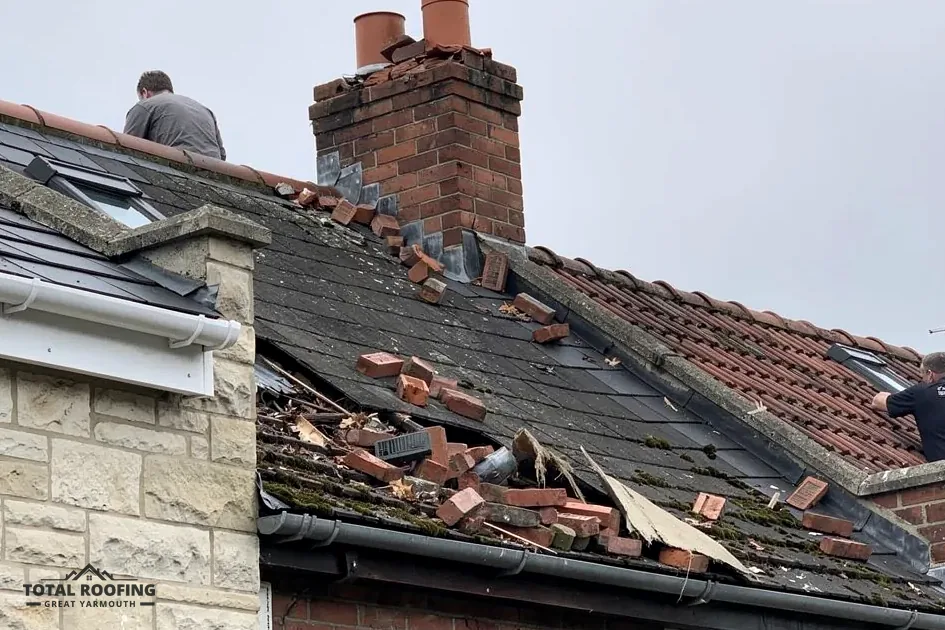
That makes the nails the weak point. An iron nail rusts, a nail driven too hard cuts the slate around the hole, and a batten that has dried and shrunk loosens its grip on the shank. When the fixing gives way, nothing stops the slate sliding down the slope until the shoulder of the next course holds it, and that is the slipped slate you see from the road: a slate sitting an inch or two lower than its neighbours, with a dark gap above it.
Slipping is therefore a fixing fault before it is a slate fault. The slate itself can be unharmed, which is why it can be put back with a hook or a tingle, though the slate it dropped on may not be so lucky.
Five causes worth ruling in or out
Because the same gap can come from several faults, the repair depends on which one is at work. The list below sets out the five that a survey checks, in the order they are easiest to spot from the ground.
- Nail fatigue: the nails have corroded or worked loose across a wide area, so slates slip in no clear pattern. Our guide to nail fatigue in slate roofs covers it in full.
- A broken slate: a split slate lets its tail drop, and the pieces can drag a neighbour out of line.
- Frost: water that has soaked into a cracked or porous slate expands as it freezes and can push the pieces apart.
- Wind: a gust under a loose tail can lift a slate against its nails and work them out a little further each time.
- Foot traffic: someone walking the slope, or a ladder leaned against it, can crack or shift slates without anyone noticing.
None of the five is a safe assumption on its own. A single slipped slate beside sound neighbours points to a local fault, while a whole course slipping points to the fixings.
Why one slipped slate can become several
The slate below a slipped one now carries water it was never meant to carry. Rain that would have run down the face of an unbroken slope drops into the opening and onto the underlay, a membrane made to shed a trace of water and not a steady flow. Where the underlay has aged, that water reaches the battens and the rafters.
The slipped slate also leaves its own nails exposed. A nail head open to the weather corrodes faster, and the neighbour slates lose a little of the cover that protects their fixings. In a gusty spell the loose slate can slide the rest of the way out, and a falling slate is a hazard to anyone on the path below.
For both reasons a slipped slate is worth reporting when you notice it. Stay off the roof, study it from the lawn or the pavement opposite, and keep family and visitors away from the ground beneath until the slate has been seen to.
Myth
A slipped slate is only a cosmetic problem, and it can wait.
Fact
The gap admits rain, and the loose slate can drop.
What to do about a slipped slate
Photograph the slope from the ground, on a zoom if you can, and note whether the slipped slate is alone or part of a line. Check the loft below for damp patches, dripping or daylight. Then get the roof looked at: a single slate can be put back, but only after somebody has checked why it moved, and whether the slates beside it hang on sound nails.
At Total Roofing Great Yarmouth the survey comes first and gives one written total price, so a slipped slate that proves to be the first of many is priced as the bigger job it is. Our slate roofing hub covers repair and replacement, and the guide to signs of a failing slate roof lists what else to look for. A picture sent to 07880 284133 on WhatsApp is a useful start, and we can look at it ahead of any visit. It shows us the gap, though only the survey shows the nails.
