
The short answer
Either metal can do the job when it is specified for the slate and the site. What both avoid is the rust that destroyed old iron nails. Ask which nail the roof specification names, and which BS 5534 code it is written against.
Why the old iron nails gave out
A slate hangs from its nail. The shank goes through a punched hole close to the top edge of the slate and bites into the batten behind, and the course above hides both the head and the hole. Where the nails were iron, they stayed in the damp of the roof space for decades, wetted by condensation as well as by rain that worked past the slates.
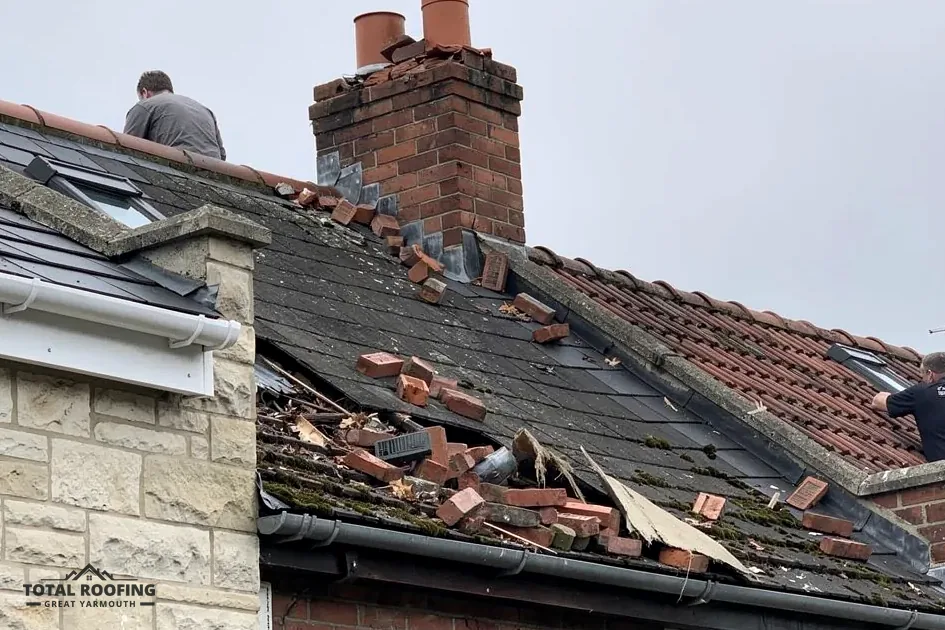
As an iron nail rusts, the shank thins and the head scales away. The slate it holds may still look perfect, but it is hanging on a thread of metal, and one strong gust, or a ladder leant on the slope, is enough to let it slide. This failure is called nail fatigue, and it can bring down whole courses of sound slate. Our guide to nail fatigue in slate roofs describes the signs.
Slates that slip on corroded nails are not worn out. The covering is sound and the fixings have failed, which is why a re-slate can put good slates back and always renews the nails.
Copper against aluminium
Both metals avoid the rust that destroyed iron. Copper is the traditional choice for slate nails: it is soft, it does not rust in the damp of a roof space and it drives without splitting the slate. Aluminium is lighter and also resists rust, but it reacts with some of the materials it touches, and a nail in contact with damp lime or cement mortar or with a dissimilar metal can be attacked.
That is why no single metal suits every roof. What a nail will touch, how exposed the site is and the slate itself all enter the specification. A thin slate asks for a nail that drives cleanly. A site that stays wet asks for a fixing that does not break down in damp.
Stainless steel is a third option for some jobs, with its own cost and its own behaviour against the slate. The point to take from all three is that the metal is chosen, and written down, before the first slate goes on, so nobody is guessing at the roof later.
What a nail specification covers
- The metal, chosen to resist damp
- The length, long enough to bite the batten
- The head, large enough to hold the slate
- What the nail will touch on the roof
What the standard says and does not say
BSI lists BS 5534:2014+A2:2018 as the code of practice in force for slating and tiling. Marley notes that installing to BS 5534 isn't required by law, so the code is a recognised standard of practice and not a statute, and it says the 2015 amendments made it clear that mortar could no longer be relied upon as the only means of securing the roof covering.
Marley adds that the fixing specification drawn up for the site always supersedes the code's minimums, and that it weighs how exposed the roof is. For slate, Cupa states that hooks are not for any pitch under 25º, so under that angle the slates are nailed. See slate hooks against nails for the choice between them.
When you compare quotes, it is reasonable to ask which nail is named and why. The answer belongs in the specification for the roof, and a vague one is worth querying before work begins, since a nail is cheap beside the roof it holds.
What to look for on your own roof
From the ground, nail fatigue shows as slates that have slipped down a few millimetres, slates lying crooked in their course and broken pieces lying in the gutter or the garden. From the loft, rust-stained batten faces and nail tips are worth a look with a torch. A repair that replaces only the slipped slates leaves the other nails in service, and those nails may be corroding in exactly the same way, so the survey looks along the whole course and the courses beside it.
A repair puts a new slate back with a replacement nail or a tingle. A re-slate renews the nails across the roof. Our guide to re-slating a roof explains the full job.
When Total Roofing Great Yarmouth surveys a slate roof, we look at the nails and fixings as well as the slates, and tell you plainly what we find. You then receive one written total price. The slate roofing hub lists the other slate work.
