
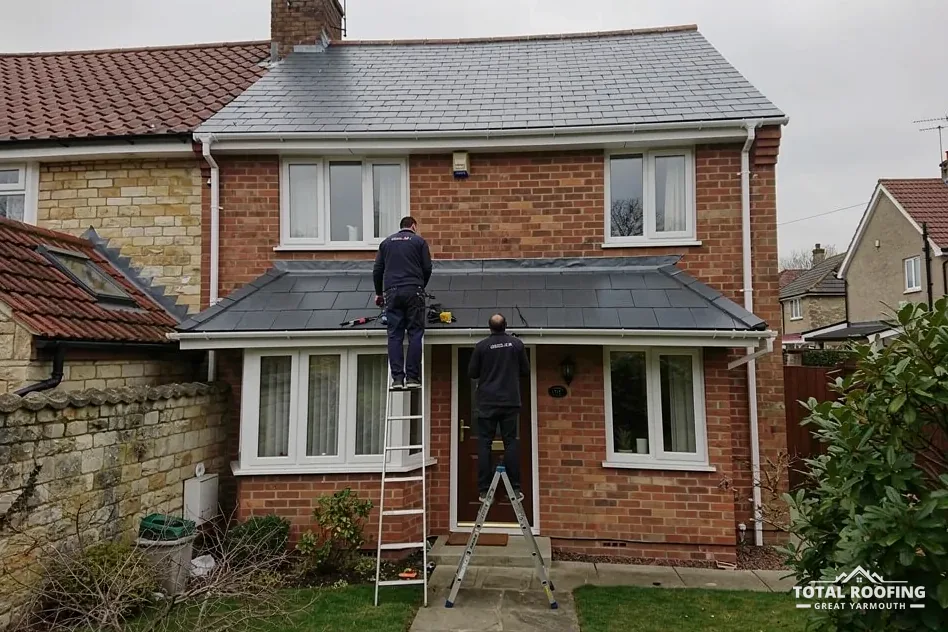
What a roof looks like after the lead has gone
Thieves go for the lead because it is a metal with a scrap value, and on an old building it is easy to reach and to roll up. The roof coverings can be left behind. What is taken is the sheet that keeps water out at the edges of the roof: the lead in a valley, the flashing along a wall or a chimney, the lining of a parapet gutter, or the whole covering of a small flat.
Once a flashing or a valley is gone, rain no longer meets a sealed junction. It runs behind the first course of tiles, down the face of the wall or onto the timbers underneath. A flat roof stripped of its lead is open to the sky altogether. The damage can stay out of sight for weeks, and it may only show indoors: a brown ring on a ceiling, damp showing at the head of a wall or a drip in the loft.
Look from the ground before you go anywhere near a roof. Shiny, bare timber or exposed felt where a grey sheet used to sit, loose tiles that have been lifted to get under a flashing, and offcuts left in the gutter all point to a theft. A fresh gap where a sheet was torn off a wall is another giveaway. Do not go up to check: a stripped roof can be unsafe to stand on. Boards that were covered by lead may be soft, and a missing flashing can open a gap beside a chimney or parapet where a foot goes straight through.
Signs on the outside
- Bare timber or felt where grey lead sat
- A valley or flashing line with nothing in it
- Tiles disturbed along a wall or chimney
- Torn edges of lead left on the wall
- Scrap pieces dropped in the gutter
- Fresh water marks on the wall below
The first hours: safety, photographs and the police
Two things matter on the day: keeping further rain out and recording what has happened. Photograph the damage from the ground and from inside, including any wet ceilings, before anything is moved or tidied. Photographs taken at the start are the evidence you will need for the police and for an insurer, and they are easier to take on the day than a week later. Note the date and the time you found it, and write down anything a neighbour or passer-by saw.
Report the theft to the police and ask for a crime reference number, since an insurer will want it. Then tell your insurer promptly. Where the building is a church or a listed property, tell whoever manages it as well, as the parish or the trustees may hold the policy and may need to act on a deadline. A tenant should tell the landlord or managing agent at once, because the buildings policy is theirs to claim on.
If water is coming in, a temporary covering over the stripped junction can hold until a proper repair. A tarpaulin or a sheet of membrane fixed over the exposed area is a make-safe, not a repair, and it should be put on by someone who can work at height safely. Do not go up a ladder onto a wet, stripped roof yourself.
Inside the building, move furniture and stored items away from the wet area, and put a bucket or a sheet under any drip. If water has reached a ceiling light, isolate that circuit at the consumer unit and keep people out of the room until an electrician has checked it. Sagging plasterboard holds water and can drop without warning, so keep clear of it.
In the first day
- Photograph the damage outside and inside.
- Report it to the police and note the reference.
- Tell your insurer and the building's manager.
- Put buckets or sheeting inside where water enters.
- Arrange a temporary cover over the stripped area.
- Keep any scraps and the dates of every call.
Insurance and the Financial Ombudsman Service
Whether a claim is paid depends on the wording of the policy. Some buildings policies list theft of fixtures from the roof, some exclude an empty building or limit what can be claimed, and some carry an excess. Read the policy and the schedule, and ask the insurer in writing what is covered rather than assuming. Whether a particular claim is accepted is the insurer's decision, and nobody else can promise it.
If the insurer turns the claim down or makes an offer you think is too low, the complaint goes to the insurer first. The Financial Ombudsman Service says a business has up to 8 weeks to consider most complaints, and you then have 6 months, counted from the final response, to take it further. You can call the Ombudsman on 0800 023 4567. In its guidance on storm damage it says it will usually look at expert reports and photos, which is one more reason to photograph the damage before any of it is moved.
A repair quote helps the discussion. It shows the insurer what the replacement involves, such as access, the area of lead and the sheet that goes back. An insurer may want its own surveyor to look at the roof, which is a matter between you and the insurer. Where a temporary cover is needed first, keep the receipts so they can go in with the claim.
What can go back in place of the lead
Lead is the like-for-like answer, and on a historic roof it may be the only one the council will accept. MyJobQuote says correctly installed lead flashing can last for over 80 years. The code of sheet sets its weight and its thickness: lead is graded by code from 3 to 8 under BS EN 12588, and Leadworx says code 4 has become the standard choice for general flashing work. The code is chosen detail by detail in the specification.
Where lead is no longer wanted, or where a roof has already been targeted, other materials can take its place. Which one suits depends on the junction: a flat roof can take a membrane or a metal sheet, while a flashing against a wall is a different detail from a valley. Our page on lead flashing alternatives describes the options, and the same material does not suit every junction.
| Material | HomeBuilding | Less |
|---|---|---|
| Lead flat roof | 60-100 years | 50 to 100 years |
| EPDM | 25-30 years | 30 to 50 years |
| GRP | 25-30 years | 25 to 40 years |
| Felt | 10-15 years | 10 to 20 years |
The two sources disagree on some figures, so both are shown. VMZinc, a zinc maker, says that a zinc roof, if correctly designed and installed, "can last in excess of 100 years". These are estimates for sound installations, not promises.
A new covering is also a chance to look at how the old one failed. Lead that was fixed with a few clips at an edge is quick to lift, while a sheet that is dressed well into a chase and held along its length takes more effort to pull away. The fixing method is part of the specification, so it is worth discussing before the material is chosen, not after.
Listed buildings and churches
Putting back something other than lead on a listed building is a change that can affect its character, and listed building consent is needed for works carried out in any manner which would affect its character as a building of special architectural or historic interest. If the house is in a conservation area, check with the council whether an Article 4 direction applies before the choice is made.
A Church of England church in use is dealt with through the faculty system rather than listed building consent, and that includes Great Yarmouth Minster. Roman Catholic, Methodist and United Reformed churches that are in use have routes of their own, and a redundant church needs listed building consent. The faculty does not stand in for planning permission, which applies to outside work in the normal way. Our guide to lead on historic buildings goes into the consent routes in full.
Inside the Broads executive area, planning is decided by the Broads Authority, which is the local planning authority for its executive area. Building Regulations stay with the district council's building control team or a registered building control approver. A temporary cover to stop the rain needs no consent in itself, but a permanent change of material should wait for the answer.
A parish or trust that has lost lead more than once may want to talk to its insurer and its architect or surveyor about the next specification, since the cover under the policy, the faculty or consent route and the choice of material all affect one another. We can describe the roof side of that conversation after a survey.
What we look at when we survey a stripped roof
A stripped roof needs a survey of the whole roof, because water that has been getting in for days or weeks may have travelled beyond the junction that was robbed. The survey covers the timbers and boarding under the missing lead, the underlay or felt, the tile battens on either side, the wall the flashing was fixed into and the ceiling below. We report back in plain words on the theft damage and on anything else seen on the way.
On small jobs, MyJobQuote's page of 22 September 2026 puts a chimney patch at around £200 and a full chimney replacement at around £570, and those two are for chimneys alone. Checkatrade, in its June 2026 table, gives lead flashing repairs at £50 to £70 per metre, exclusive of VAT. Nobody should multiply a per-metre rate by a roof's length to reach a total, because access and the damage underneath decide the job. Our lead flashing cost guide explains the figures further.
The survey comes first and the price follows as one written total. Scaffold, where the job needs it, is part of that written quote, and the county council's highway licence for scaffold over the pavement or road is something we arrange with our scaffolder. For a first look before anyone visits, WhatsApp us a photograph of the damage. The lead roofing hub lists the rest of our leadwork guides.
