
What makes a lead flat roof different
Most flat roof coverings are a single sheet of membrane or a poured layer that bonds into one skin. A lead flat roof works another way. It is built from separate sheets of milled lead, each cut to a bay, dressed over a timber deck and joined to its neighbour by a fold or a raised timber roll. The joints are part of the design, because lead moves with the temperature far more than a membrane does and the joints let it move without tearing.
That difference decides how the roof is inspected and repaired. A membrane is judged as one surface; a lead roof is judged bay by bay, joint by joint and upstand by upstand. A split in one bay says little about the next one, and a sound-looking sheet can sit on a deck that has rotted underneath.
Lead is chosen for small, awkward or visible flat roofs: a porch, a bay top, a dormer flat, a parapet gutter or a balcony that is seen from a window. A listed or period building can also be expected to keep its lead, which is a question for the conservation officer or the council before any other covering is priced.
Lifespan figures exist, and the published ranges do not agree. HomeBuilding gives a lead flat roof 60-100 years. Less says "Lead is the longest-lasting option at 50 to 100 years". Both are published ranges for the covering, not promises for a particular roof, and the deck, the falls and the detailing around the edges decide whether a given roof reaches either end.
Rolls, drips and the language of the roof
Two details do the jointing on a lead flat roof, and they work in different directions. A roll runs up and down the fall, over a shaped timber batten, and the lead from each bay is dressed round it. A drip runs across the fall, where the deck steps down by a small amount, so water runs over the step and the sheet above overlaps the one below. Together they cut the roof into bays that can each expand and shrink on their own.
Where a bay meets a wall, the lead does not stop at the deck. It climbs the wall as an upstand and is tucked into a chase or covered by a flashing, so water running down the wall cannot get behind the sheet. That junction takes more movement and more weather than the middle of a bay, and it is the line a leak is most worth tracing back to.
The terms are worth knowing before you read a quotation, because a survey finding or written price will use them. A fault described as a split at a drip is a different repair from a fault at a roll or at an upstand, and a description that names none of them gives you nothing to compare.
Terms on a lead flat roof
- RollBatten under lead, running with the fall
- DripStep in the deck, running across the fall
- UpstandLead turned up a wall or kerb
- WeltFolded seam that joins two sheets
- BayOne sheet between joints
- FallThe slope that carries water away
Falls, drainage and where water goes
No flat roof is truly level. The deck is set to a fall so that rain runs to an outlet, a gutter or a parapet drain, and the fall has to survive the covering, the boards and the years. On a lead roof the drips both create and hold the fall, which is why they are cut into the deck rather than formed in the lead alone.
The one sourced falls figure in this area belongs to another material. BS 6229:2025 sets a minimum finished fall of 1:80 for membrane flat roofs, and it covers continuously supported flexible waterproof coverings, which means membranes, not lead. Do not read that figure across to a lead roof: the fall for lead is set in the specification for that roof and checked on site, against the length of each bay and the position of the outlet.
Ponding tells you the fall has been lost. A shallow pool that is still there days after rain means the deck has sagged, a board has dropped or an outlet is blocked. Standing water does not harm sound lead quickly, but it hides the line where the lead meets a wall, loads the deck and shows that the layout no longer drains as designed. The cause is a carpentry and drainage question first and a lead question second.
Thermal movement and why lead splits
Lead expands in sun and shrinks as it cools. Over a long sheet that daily and seasonal movement adds up, and lead is soft, so it does not spring back: it creeps. A sheet fixed too tightly cannot move at its joints, so it tears at its weakest point, such as a corner or a fixing. A sheet cut too long for the bay stretches a little more each year and thins.
This is the reason for the bay size and the joint spacing, and the reason a roof laid with too few drips or rolls fails early however good the metal. The thickness of the lead, set by its code, also matters. Leadworx, a lead flashing maker, lists codes 3 to 8 under BS EN 12588, with code 3 as "Soakers / Light duty" and codes 7 and 8 as "Heavy duty". Which code a flat roof takes is set by the specification, not by habit.
Fixings are the other half of movement control. Lead on a roof is held by clips and by its own folds, not by nails through the face, because a nail through the sheet becomes a tear and a leak. If you can see screw heads or lumps of mastic in the field of the lead, someone has fixed it in a way the metal cannot tolerate, and the repair list should say so.
Myth
Lead is soft and long-lasting, so it can be fixed down firmly anywhere.
Fact
Lead must be free to move at its joints; fixed hard, it tears.
The deck under the lead
The lead is only the weather skin. Beneath it sits a timber deck, laid on joists, with a separating layer between wood and metal so the timber does not attack the lead and the lead does not stick to the boards. When a lead flat roof leaks, the water may have entered at a defect in the lead, but the damage is in the boards and joists below, and a repair that patches only the metal leaves the wet timber behind it.
For that reason a survey of a lead flat roof includes the deck from underneath where it can be reached: the ceiling below, the underside of the boards in a roof void, and the junction with the wall. A soft board, a stain that has spread or daylight at a joint tells you more than the top surface does.
Insulation belongs to the same build-up. Whether it is a warm or a cold roof decides whether the layers need ventilation, and a change to the build-up is a Building Regulations matter. Check with the council's building control team before work starts, so a re-covering that changes the layers is not treated as a like-for-like repair.
Insulation also changes how condensation behaves inside the roof. In a warm roof the insulation lies over the deck; in a cold roof it hangs beneath with an air space above, and each is detailed differently at the edges. The survey notes which one you have, because it alters what may be done to the covering without disturbing the layers beneath.
Faults to look for on a lead flat roof
Most of what goes wrong on a lead flat roof is visible from a ladder, a window or a good photo. The list below sets out what a survey looks at. Several items can be checked by eye with both feet on the floor, which is the safe way to do it, and none needs a step onto the roof.
Send a photo on WhatsApp if you cannot tell what you are looking at, and a clear picture of the joints and the wall edges is enough for a first look. A written price waits for a visit, because a picture cannot show the state of the deck.
Take in the entire roof, never just the patch that stained the ceiling. A leak under one corner can start at a failed upstand several metres away, because water runs along the deck before it drops through. We survey the full roof and tell you what else we saw, so a second failing joint is known before a repair is priced.
Gutters and outlets belong in the same look. A lead roof that drains into a blocked hopper behaves like a roof with no fall at all, and no amount of work on the metal fixes that. Clearing and checking the drainage is part of reading a flat roof properly, and it costs far less than replacing a covering that was never the problem.
What a survey checks
- Cracks or splits along rolls and drips
- Lead lifting or curling at the edges
- Pools of water left days after rain
- Gaps or dried mastic along wall upstands
- Soft or stained boards seen from below
- Patches, screws and mastic in the open lead
- Blocked outlets, gutters and downpipes
Repair, recover or replace
A single split, or one upstand that has let go, can be put right with a patch of new lead, provided the sheet around it has not thinned and the boards under it are dry. Where there are many splits, thin lead across a whole bay, or a deck that has gone soft, patching is only delaying the recover. The deciding facts are the condition of the deck and the number of bays that have failed, and both come from the survey, not from the age of the roof.
Published lead prices do not help here. MyJobQuote's lead figures cover chimney leadwork only, so they say nothing about a flat roof, and a flat roof gets its price from the survey, in one written total. The number of bays, the edge details and how the roof is reached are what move that price, along with the deck beneath.
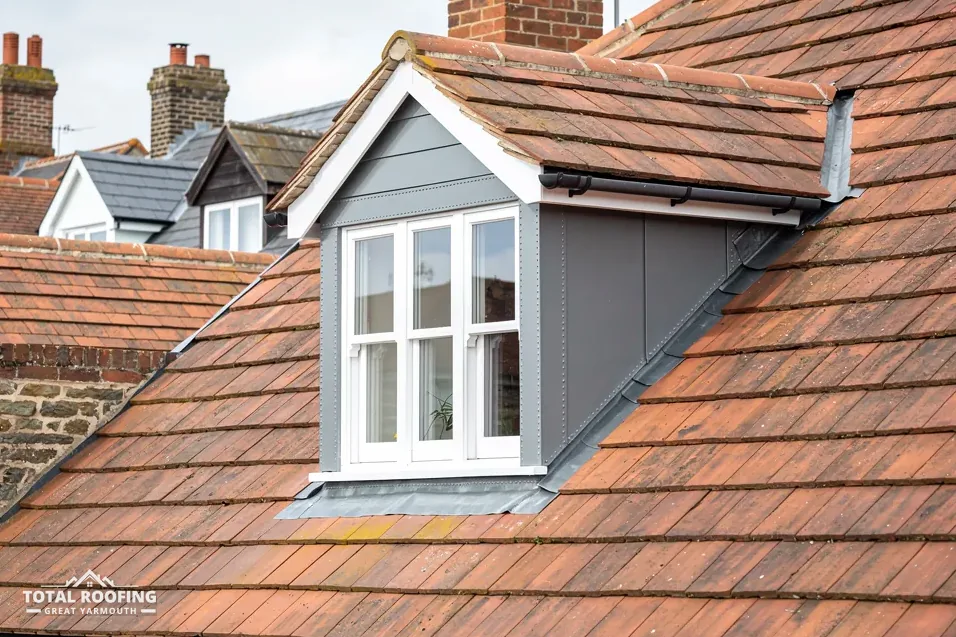
If you are weighing lead against another covering, the lead flashing alternatives guide sets out the options and where lead still makes sense. Our lead roofing and leadwork page brings the related guides together, and the lead dormers guide covers the cheek and roof details where a dormer meets the main slope.
Set any quote for a lead roof beside another firm's and ask what each one covers: how many bays, which joints and which edges. Two totals that look alike can describe very different amounts of work.
