
The short answer
Roof dilapidations are the roof repairs a landlord says a tenant owes when a lease ends. Whether you owe them depends on the wording of your lease, which a solicitor or surveyor should read. A roofer's survey and written price can answer the roof entries.
What the term means for a roof
Dilapidations is the word for the condition a building is left in compared with what the lease required. At lease end a landlord, sometimes through a surveyor, may serve a schedule listing the repairs they say the tenant should carry out or pay for. The roof is one section of that schedule, alongside walls, floors, services and decoration.
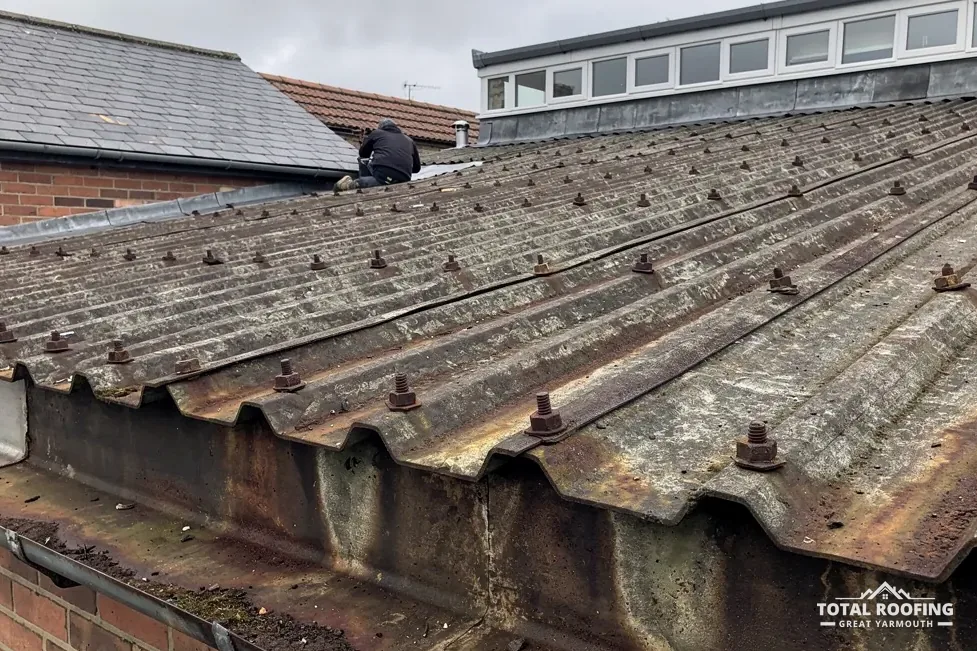
A roof entry can be short or long. It might say that sheets are corroded, that gutters are blocked, that flashings are lifting, that a rooflight is cracked or that the covering has leaks. An entry names a fault but not how big the job is or what it would cost, and that gap is where a roofer's survey helps.
Who is liable for the roof at all depends on the lease. On a single-occupier building the tenant may carry the repairing duty. On a unit in a larger block, the landlord may keep the roof and recover its upkeep through a service charge, in which case a roof line in a schedule deserves a second look. Those are questions about the document, so they belong with whoever reads it for you.
Lease first, then the roof
Before anyone prices a repair, read what the lease says about the roof. Three questions frame it:
- Does the tenant have a duty to repair the roof, or only the inside of the unit?
- Does the lease limit that duty to the state of the roof when the lease began?
- Does it make the landlord responsible for the structure, with the cost shared through the service charge?
None of these is a roofing question; each is a matter of the lease and its terms. A solicitor can read the covenant, and a chartered building surveyor can advise on how a schedule should be answered and whether an entry goes further than the lease allows. What we can do is describe the roof as it stands: what condition each part is in, what repair it would take and what the work involves, so that the person advising you has facts to work from.
A landlord's schedule is a claim. It may be right, overstated or aimed at work the lease does not require. A survey from a firm with no stake in the settlement gives you a clear picture to set beside the claim.
What a roofer can price at lease end
The jobs a roofer can price directly are the ones a schedule names: clearing and refixing gutters, re-sealing flashings, replacing cracked rooflight panels, patching or replacing damaged sheets, treating rusted edges on steel cladding. For each, the roof is surveyed, the cause is identified and the repair is described in plain words.
Three points change a simple-looking repair. First, asbestos. HSE's advice reads: "If the building was built or refurbished before 2000, assume that there is asbestos in it." Its guidance A14 adds that AC roofs are always fragile. A schedule line that says repair some sheets can turn out to be a line about asbestos cement, with different methods. Second, access: a roof high above a yard or a road can need scaffolding, and on a pavement or road that needs a highway licence from the county council, which we arrange with our scaffolder. Third, safety on the roof itself, covered on our fragile roof safety page.
Our commercial roof surveys page explains what is looked at on a business roof.
Pricing a schedule item without guessing
A figure on a schedule is the landlord's estimate, written before anyone has stood on the roof. Ours comes in a different order. The survey covers the entire roof, so a scheduled item is judged in context. Where a repair would be a stopgap, or a neighbouring section is failing, you are told in ordinary language.
The price follows as one total in writing for the work described. Business roofs carry no rate card; each is priced from its own survey. If a lease is ending and a schedule is arriving, an early survey also gives you a picture of the roof before positions harden.
Whatever the work, a building owner or tenant who is a business is the client, and construction rules apply to the project. Our CDM on commercial roof work page explains who carries which duties, and the range of business roofing work sits under commercial roofing.
