
The short answer
A slate roof leaks where a slate has slipped or cracked, or where lead, a valley, the ridge or the underlay beneath has failed. The drip inside need not sit under the fault, because water runs along the underlay and timbers first. Tracing it from the loft finds the real entry point.
Where rain gets past slate
Slates overlap so that rain passes from one course to the next and drains off at the eaves. A leak means that path has been broken somewhere, and the break falls into a short list of places. The slates themselves come first on any check, then the metalwork and joins that interrupt the slope.
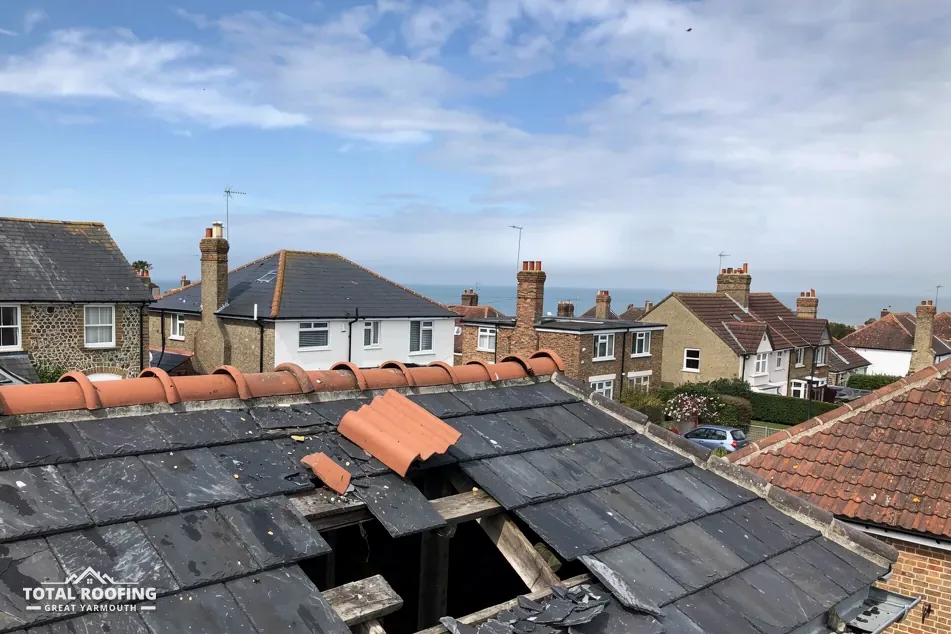
A slipped slate opens a gap through which rain reaches the underlay. A cracked slate does the same through the split, though the gap is thin and easy to miss from the ground. Around a chimney, a dormer or a wall, lead flashings turn the water back onto the slates; if the lead has lifted, cracked or been pulled away from the brickwork, rain runs behind it.
Valleys, where two slopes meet, carry the water of both and so take the heaviest flow. The ridge at the top is sealed with ridge tiles bedded on mortar or dry-fixed, and when the bedding fails, rain can get under the slates at the top of each slope. Finally the underlay, a membrane under the battens, is the last line of defence, and an old felt that has split or rotted will let through what the slates let past.
Why the stain is never where the hole is
Water that gets through a slate lands on the underlay and runs down it, following the lie of the roof until it meets a batten, a rafter or a join. It can travel a metre or more sideways and downward before it drips, and then it soaks along a timber before it shows on a ceiling. The brown ring in your bedroom sits below a point that might be on the other side of a rafter.
That is why patching a slate straight above a stain can leave the stain growing, and the loft check beats any guess from below. The honest method is to work upward and outward from the stain, tracing the damp, until the wet and darkened timber stops.
Wind can push rain upward under a slate and sideways under a flashing, so a drip that shows only in certain weather may come from a fault that stays dry the rest of the time. A single stormy night can be all it takes, which is why a leak can be hard to find in dry weather. Note the wind direction on the day the stain grew, because it narrows the slope to check.
Following the damp back to its source
- Enter the loft in daylight and torch the rafters and felt
- Look for dark, damp timber and stained underlay
- Follow the wet timber upward, not just straight above the stain
- Check the nearest chimney, valley or wall junction
- Mark the spot and note the weather it appeared in
What a survey looks at outside
A survey from the ground and on the slope runs through the same list. It looks for slipped, cracked and missing slates, since those are the quickest faults to see. It checks the lead around the chimneys and any abutments, and the valleys for blockages, split lead or failed bedding. It looks along the ridge for loose or missing pieces, and the gutter edge for slates that have dropped out of the line of the eaves.
The underlay is harder to inspect, since it is hidden unless the slates are lifted. Daylight through the roof from the loft is one warning sign, and so is a damp, mouldy underside to the felt. Our guide to signs of a failing slate roof lists these markers in more detail, and the page on slate roof repairs explained shows how each fault is mended. Because a slate roof hides its own fixings, a survey also asks how old the roof is and whether it has been repaired before, since earlier patches can be part of the story.
Dealing with a leak you have found
Set a bucket beneath the drip and shift anything valuable out of the way. A folded towel in the bucket stops the splash and the noise. Keep an eye on the ceiling too: a bulge or sag means water is pooling above the plaster. Stay off the roof, because slate cracks underfoot and a damp slope is treacherous. Photograph the stain and, if you can see it, the slope above. Write down the date and the weather when the drip began, since that helps narrow the slope and the fault.
We look at a picture sent to 07880 284133 on WhatsApp. The survey that follows covers the whole roof, and Total Roofing Great Yarmouth then gives one written total price covering the work found. The slate roofing hub explains what comes after, from a single slate to a full re-slate where the nails or the underlay have failed. A leak traced to its source stays fixed, while one patched at the stain returns.
