
The short answer
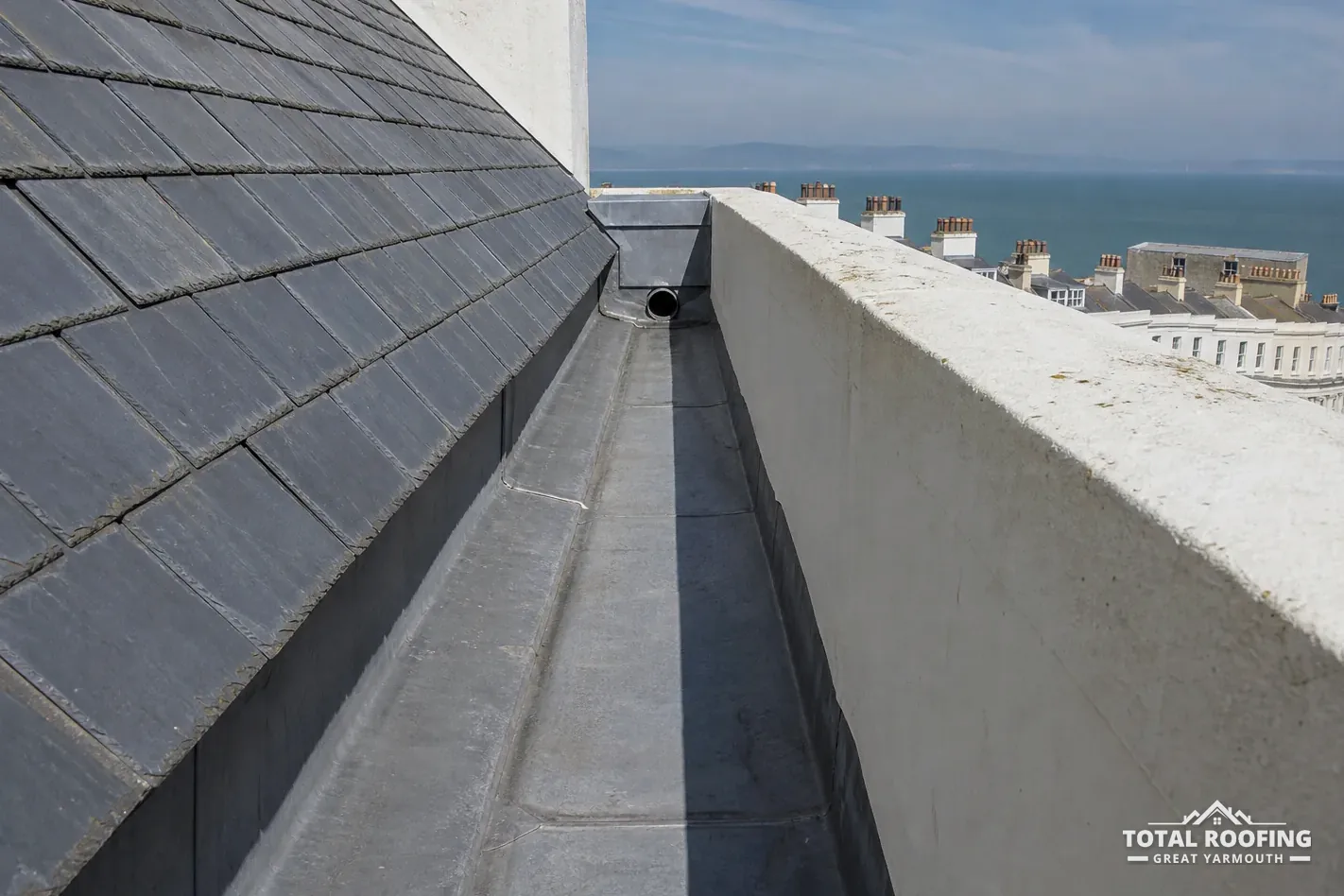
A roll is a raised joint running down the fall of a lead roof, where two sheets meet over a shaped timber core. A drip is a step across the fall that lets water drop to the next level. Together they divide the roof into bays so the lead can move.
Why lead is laid in bays
Lead expands in warm weather and shrinks when it cools. On a small piece the movement is slight, but across a whole roof it adds up, and a single large sheet fixed hard at its edges would stretch, buckle and finally split at a fold. The cure is to cut the covering into separate pieces, called bays, and to join them with details that let each piece slide a little against its neighbour.
The details that do the joining are rolls and drips. You can see them on a lead roof as lines and steps, and they explain why a roof over a bay window, a porch or a small extension looks striped rather than plain. MyJobQuote says correctly installed lead flashing can last for over 80 years, and that figure is about flashing. For a lead flat roof the guides give ranges: HomeBuilding says 60-100 years and Less says 50 to 100 years. All three rest on the movement being allowed for.
Rolls and drips side by side
The two details do different jobs and run in different directions across the roof.
| Detail | Runs | What it is | What it does |
|---|---|---|---|
| Roll | Down the fall | Lead formed over a shaped timber batten | Joins two bays and lets the sheets move beside it |
| Drip | Across the fall | A step down from one level to the next | Carries water to the lower bay and breaks the run of the sheet |
Both are built from the same lead sheet as the rest of the roof. A roll sits above the line of the boards and so keeps the seam out of the path of the water, while a drip works by changing the height. Water running down a bay reaches the step, falls over the lip onto the lower bay and carries on, so no single sheet has to span the whole slope. Under BS EN 12588, according to the maker Leadworx, lead sheet is sold in codes 3 to 8. Which code goes into which part of a roof is for the specification to decide, so the lead over a roll and the lead in a drip need not carry the same code.
Why bay joints matter on a bay window roof
The small flat roof above a bay window is where a house owner can meet a lead roll for the first time. It is a short run in several planes, and each plane is a bay of its own, with the joints sitting where the roof changes direction. Because the sheet is small, the temptation is to run it in one piece. That is how a split starts: the sheet has no room to move, so the strain ends up at a fold or a fixing instead.
Our page on lead bay window roofs covers the shapes involved, and the guide to lead flat roofs covers the larger case where drips set the fall. BS 6229:2025 applies to flat roofs with continuously supported flexible waterproof coverings, which are membranes. Lead sits outside its scope, so a lead roof is judged against its own specification instead. The fall of the roof, meaning the slope that carries water to the gutter, is built into the way the bays and drips are laid out, and a drip is one of the ways a lead roof gets its fall.
What a failing roll or drip looks like
A roll fails when the lead over the core cracks along a bend, when the cap at the top edge lifts, or when the core underneath rots and the shape sags. A drip fails when its lip loosens so rain is thrown sideways onto the timber, or when the step itself cracks where it has been folded back and forth too many times.
- A visible line of splits along the top of a roll
- A lifted cap or an open seam at a roll's end
- Sheets that have crept down the slope and left a gap at the upper edge
- Staining on the ceiling below a joint rather than below the middle of a bay
The leak shows inside as a stain, and a stain beneath a joint points at the joint. Boards that stay damp under a roll can swell and lift it, which opens the seam again after a patch has been fitted over the lead alone. A survey follows the water back along the roll or the drip and checks the boards under the lead as well, because a roll built over damp timber can fail again after a repair to the metal alone.
For where it sits on a roof, start from the lead roofing and leadwork hub. We leave rolls and drips unpriced here: what sets the figure is found on the survey, and we then give one written total.
