
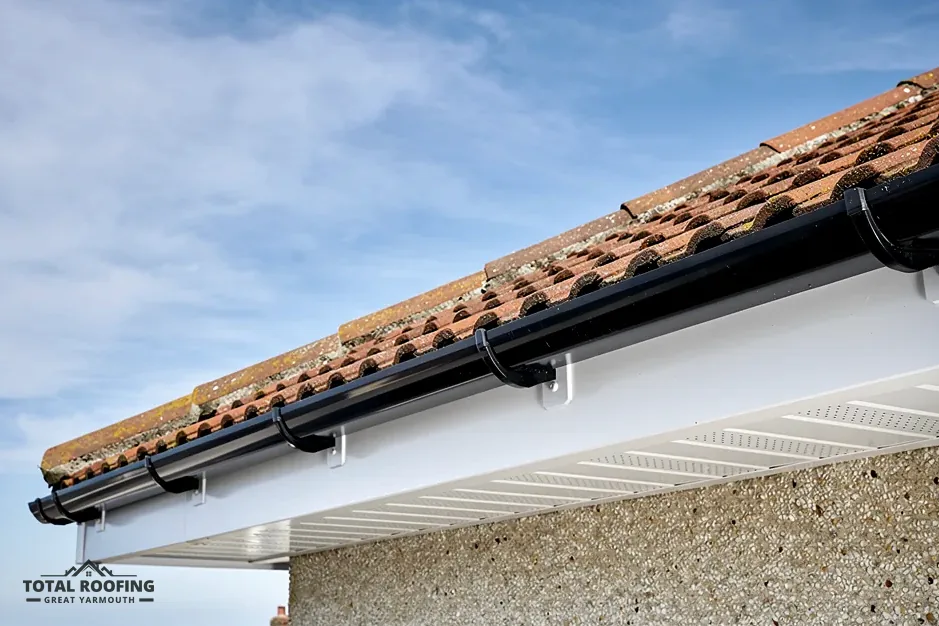
The short answer
Leave an active nest alone. The Wildlife and Countryside Act 1981 section 1 protects a wild bird's nest from being intentionally taken, damaged or destroyed while it is in use or being built. Proofing waits until the nest is empty, and bats need a separate check before any roof work.
What the law protects
Section 1 of the Wildlife and Countryside Act 1981 catches a person who, intentionally, "takes, damages or destroys the nest of any wild bird while that nest is in use or being built". Two points carry the weight. The protection attaches to a nest in that state, which is not every old nest, and the offence needs an intentional act.
That is not the same as a blanket ban on anything near a bird. GOV.UK's guidance on wild birds says "There are no licensing purposes to permit development or construction", so the answer for a nest in use is to wait for it to be finished with, not to look for a licence that would let the work go ahead.
The law does not give dates for a nesting season, and no dates appear here. What matters is the state of the nest: whether birds are building it, sitting on eggs or still feeding young, or whether it has been left empty. Because the nest is in a soffit, and a soffit is a gap under the roof edge, it is easy to miss from the ground.
Signs that birds are using a soffit
The signs are easy to spot once you know them. These point to birds at the eaves, each visible from the ground:
- Birds flying to and from the same small gap at the soffit, or where the fascia meets the wall.
- Twigs, grass or feathers hanging from the gap, or a trail of droppings on the wall below it.
- Chirping or scratching from the roof edge, particularly when an adult arrives with food.
- A damaged or lifted soffit board with a hole large enough for a bird to enter.
A gap that birds use may have been created by something else: a board that has warped or rotted, an open end or a section where a vent has been displaced. Birds take advantage of a weak spot and do not make one in sound uPVC or timber, so the nest can be a symptom of the soffit's condition, and the board needs a look in any case.
What to do while the nest is in use
Leave the nest and the entrance alone. Do not block the gap, do not pull material out and do not poke at it from a ladder. Doing so risks harming the birds and could fall within the offence quoted above. Gutter and fascia work close to the nest is better held back until the nest is empty.
Bats are a separate protected group, and roof edges can suit them as a roost. GOV.UK's guidance says that "All bat species, their breeding sites and resting places are fully protected by law". The guidance names "repairing or replacing a roof" as work that can need a Natural England licence. Someone who damages a roost commits an offence even where the damage was not meant, so if the signs point to bats rather than birds, such as droppings or movement at dusk, stop and take advice before touching the roof edge.
Meanwhile the gutter and the fascia can still be assessed from a safe distance. A photograph of the gap, sent on WhatsApp, helps us see how large it is and what the board looks like.
Proofing the gap once the nest is empty
Once the nest has been left, the cause can be dealt with. A damaged or rotten soffit board is renewed, a gap at the end of a run is closed, and the join between fascia and soffit is sealed so that birds have nowhere to enter. A vent is a different matter: a soffit can carry ventilation, so the closing material must leave it clear. Our page on soffit ventilation explains what the vent is for.
Age matters too. If the soffit is an old panel, HSE says "If the building was built or refurbished before 2000, assume that there is asbestos in it", and it lists "AIB white soffit panels to underside of roof eaves". Do not drill, scrape or break an old board, and read asbestos soffit boards first.
Our survey takes in the soffit, the fascia, the gutter and the roof above them, and what it shows is explained to you in everyday language, with anything else we notice. The price for the repair arrives as one written total. For the rest of the roofline, see guttering, soffits and fascias.
