
The short answer
Yes, with limits set by the weather on the day rather than the calendar. Fresh mortar is damaged by frost before it hardens, so pointing and rebuilding wait for suitable days. Lead work and make-safe jobs are less affected, and a stack in danger should not be left for spring.
Why frost matters to mortar
Mortar is mixed wet and hardens over days. While it is still wet, water in it can freeze, and ice expands. Mortar that freezes before it has set can crumble or fail to bond to the brick, and a joint that has been spoiled this way weathers faster than one laid on a mild day. That is the reason pointing, flaunching and rebuilding are planned around the forecast, with the work held back on days that threaten a frost overnight.
Rain is the second constraint. A stack that is saturated gives a poor surface for new mortar, and rain falling on a fresh joint washes the surface of it. Wind adds a third, because reaching the crown of a stack from a scaffold has to be safe as well as practical, and wind that makes the work unsafe stops it, whatever the month.
None of this makes winter a closed season for chimney work, and it does not make a mild week in February any different from a mild week in May. A run of dry, mild days can come in any month, and the work can go ahead when it does. What the weather rules out is the day, not the job.
How each kind of repair is affected
| Job | Weather sensitivity | What follows |
|---|---|---|
| Repointing | Fresh mortar is damaged by frost and rain | Waits for suitable days |
| Flaunching | A large mortar bed, exposed at the top of the stack | Waits for suitable days |
| Stack rebuild | Brick laid in mortar, over several days | Planned around the forecast |
| Lead flashing | Metal, with no mortar bed to set | Less sensitive to cold, but not to wind or ice underfoot |
| Make-safe | Removing or securing loose parts | Done as the situation requires |
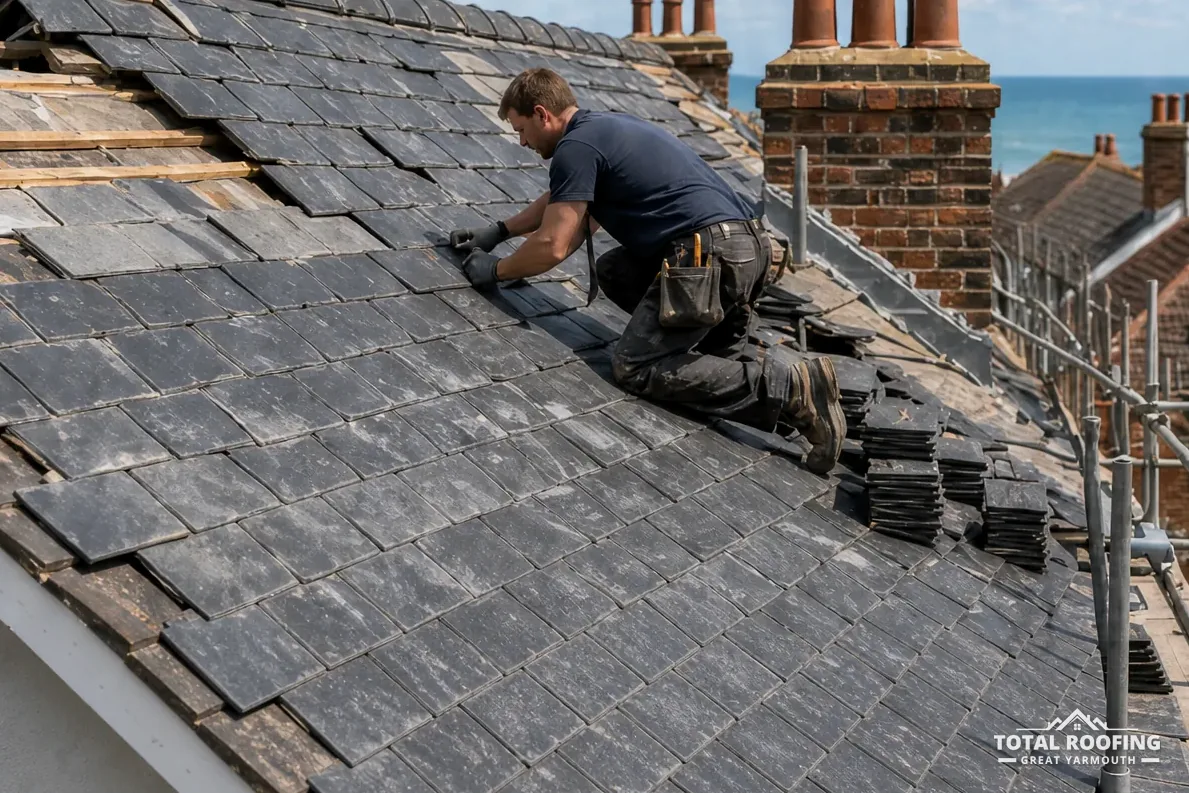
Lead is a metal sheet that is cut and dressed, with no wet bed to set, so a flashing repair is less tied to temperature. It still cannot be done in high wind or on an icy roof, because dressing sheet metal at the edge of a pitch needs a safe footing and a clear hand. MyJobQuote says correctly installed lead flashing can last for over 80 years, which is a reason to repair a sound flashing instead of replacing it.
Our guides to chimney repointing and chimney flaunching explain what the mortar jobs involve.
When it cannot wait for spring
Some faults are urgent in a winter. A stack that leans, bricks that have fallen, a pot that has come loose or a chimney dropping debris onto a path or a neighbour's property are risks to people, and the work is to make the stack safe first and rebuild when the weather allows. A make-safe can mean taking down the loose top courses or securing what is left, and it does not need the dry, mild spell that a rebuild does.
The money side is worth knowing. MyJobQuote puts a typical emergency roofer call-out at £150 to £300 and says extensive storm damage repairs can cost £1,200 or more (22 October 2026). The Financial Ombudsman Service says: "we'll usually look at expert reports and photos", so photograph the damage where it lies, then contact your insurer.
Where the repair is a rebuild, our guide to chimney stack rebuild describes it. The make-safe and the later rebuild are priced from the survey, and you receive a single written total.
What to do while you wait
If a repair is booked and a cold snap or a wet week arrives, the date moves. That is a decision about the weather, because mortar laid into a frost is mortar spoiled, and a joint done twice is worse than a date that moves.
In the meantime, a look from the ground with binoculars after wind or hard frost is enough to spot new cracks, loose bricks or a tilted pot. Photograph them with the date. A photo sent to WhatsApp 07880 284133 is a fair first look. Keep clear of the ground beneath a stack that looks loose, and keep a note of the date and the weather when you saw each change. A pattern of change over a cold week tells the survey more than a single picture.
The main page on chimney repairs covers the other faults. Total Roofing Great Yarmouth surveys the whole roof before quoting, so a winter visit looks at the tiles, the gutters and the lead as well as the stack.
