
The short answer
A bird guard is a mesh or cage over the pot that stops birds dropping nest material into the flue. It should be fitted while the pot is empty. A guard cannot be fitted over a nest in use or being built, because wild birds' nests are protected by law.
What a bird guard does
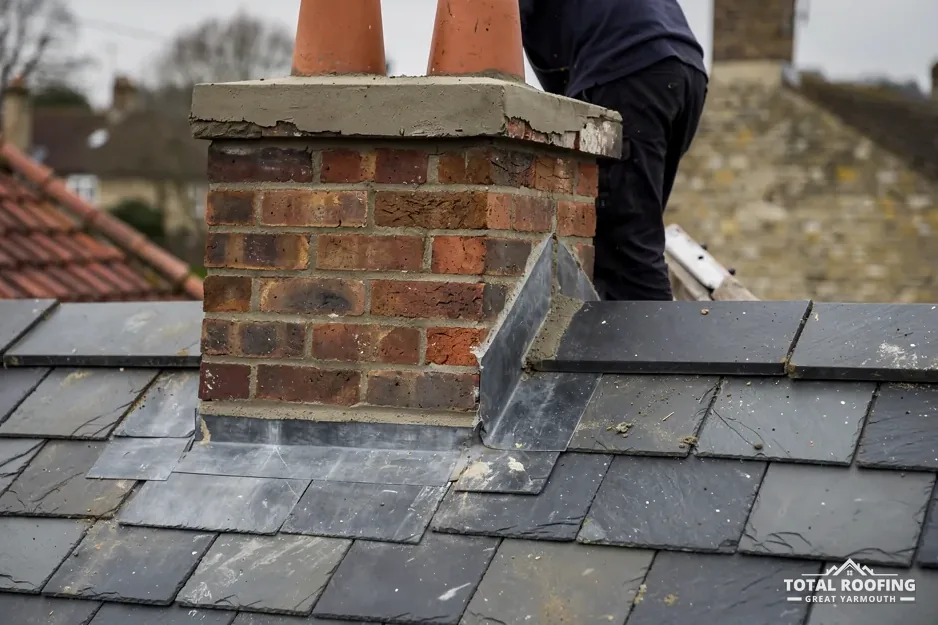
A bird guard is a cage or mesh dome that fits over the top of a chimney pot. Air and smoke pass out through it, but birds cannot get in, perch inside the pot or drop material down the flue. On the Norfolk and Suffolk coast, gulls and jackdaws are among the birds that can settle on a roof, and a chimney pot is a convenient ledge for either of them.
A flue packed with sticks is more than a nuisance, because the pile can reach down a long way and is difficult to clear once it has settled. Smoke and fumes from a fire, stove or boiler can no longer leave freely, and a blocked flue is a safety matter as well as a source of mess. Nesting material that falls through can also reach the fireplace or the chimney breast and leave droppings and debris behind.
A guard does not cure damp, and it does not replace a rain cap, though some designs combine both. Our page on chimney cowls compares the types side by side.
Why timing matters
A guard does its job when it goes on before a pair of birds has chosen the stack. Once a bird has started building, the situation is different in law. The Wildlife and Countryside Act 1981 protects nests: it is an offence to act intentionally in a way that takes, damages or destroys the nest of any wild bird while that nest is in use or being built.
So a guard cannot be fitted over an active nest, and an occupied pot is left alone until the nest has been abandoned or the young have flown. The test is the state of the nest, in use or being built, and that can only be told by looking at the pot. A pot that is clear and empty is the right moment to fit one.
If you can hear chicks, see birds going in and out or see fresh material at the pot, do not poke or clear it yourself. Mention it when you ring, and the survey can see what is going on. A guard put on in a hurry over a nest that is in use would do more harm than a few days of waiting.
Myth
A bird guard can be fitted to a chimney whenever it suits.
Fact
Never over a nest in use or being built.
Gulls, jackdaws and the stack
The two birds behave differently, so the guard has to suit them. Gulls are large and will stand on a pot or ridge, and a mesh over the top stops them sitting in the opening. Droppings from a bird that sits there regularly can also stain the stack and foul the gutter below. Jackdaws carry sticks and push them down the flue, and they keep adding to the pile, which is how a flue fills.
The mesh size and the strength of the guard need to suit the pot. A flimsy cage can be bent or lifted off by a determined bird, and one that is too fine can clog with soot where a fire is lit. Whether a fire, stove or boiler uses the flue settles the choice, so that question is asked first.
A guard also needs fixing so it stays put in a gale. A cage that is held on by a single clip can be lifted off by wind or by a bird, and it then lands on the roof or in the garden, so how the guard is fixed needs checking as well as the mesh.
Fitting a guard and what it costs
A guard goes on at the head of the stack, so a safe platform is needed first. If the platform has to sit out over the street, highway licensing by the county council applies, and we arrange the licence with our scaffolder. It makes sense to fit a guard when work is already under way, because a platform is in place and a second visit can be avoided.
Nothing is priced until somebody has surveyed the roof, and the survey takes in the pot, its bed and the joints beneath it. Anything else we notice up there is reported in plain words. The price is one written total. If the bed beneath the pot has failed, that is dealt with at the same time, and our page on chimney flaunching explains it. What affects the figure is under chimney repair costs, and the full range of stack work is on the chimney repairs hub.
