
The short answer
Sound tiles and slates can be reused or sold on as reclaimed, and the rest leaves site as building waste with a registered waste carrier. Asbestos is the exception. It needs a lockable skip, and both Norfolk's and Suffolk's recycling centres refuse it.
Reuse, salvage or waste
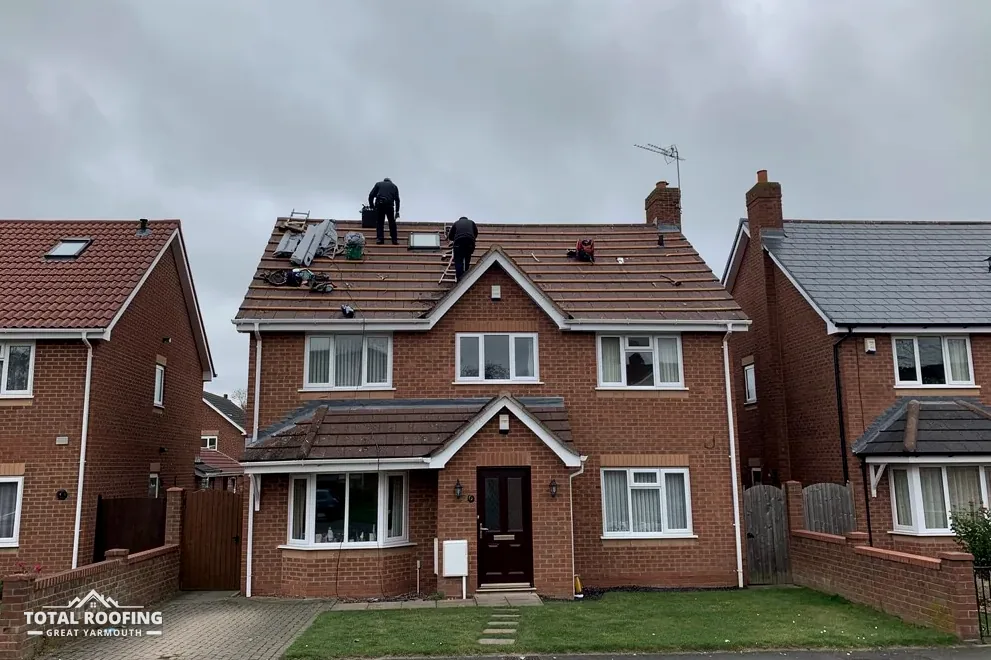
Old covering has three possible fates. Tiles and slates that are whole, flat and not flaking can be set aside and laid again, on your roof or elsewhere. Sound pieces can be sold on through the reclaimed trade, which is why old clay tiles and slates are traded at all. Everything else, including cracked, laminating and porous pieces, becomes waste that has to go off site, along with old underlay and any battens that have been replaced.
Age alone does not rule reuse out. Marley reports that the BRE determined a minimum life expectancy of 60 years for clay roof tiles, so a clay tile that has been up for decades may have time left in it. HomeBuilding also gives reclaimed Welsh slate a lifespan of "50-80 years". The condition of each piece decides.
- Reuse on the same roof, where the tile matches and is sound.
- Reclaimed sale, where the tile or slate has market value.
- Waste, for pieces that are broken, flaking or too many to match.
Who may carry old roofing away
Waste leaving a house has to be carried by someone entitled to carry it. GOV.UK describes the register for waste carriers, brokers and dealers in England, where a carrier registers as upper tier or lower tier. A firm that moves waste for you should be able to tell you which tier it is registered in and what its registration number is.
Ask this before work starts, not after the skip has gone. Where the answer is a shrug, a skip full of your old tiles may end up in a lay-by. The roofer's answer is also how you learn whether the firm intends to use a skip, take the material away in its own vehicle, or leave it to you.
A skip standing on the road is a separate matter from the scaffold and has its own rules, and it can obstruct a road or pavement, so the arrangement should be spelled out in the quote rather than assumed. Where the old covering is carried off in a vehicle instead, the same questions about who drives it and where it is going still apply, because a quote that mentions disposal without saying how has not answered them.
Asbestos: the one material that changes the plan
HSE guidance reads "If the building was built or refurbished before 2000, assume that there is asbestos in it", and says AC roofs are always fragile. On HSE's lists, whole cement sheets taken down with care are non-licensed work, and sheets that have been broken up are notifiable non-licensed work. Whichever applies, suspect sheets are a matter for the survey, so that the right route is planned before anyone starts lifting them, and nobody should walk on an AC roof or drop pieces from height.
Asbestos does not go in an ordinary skip. HSE's EM9 guidance says "Use a lockable skip for asbestos" and that "it is not good enough to throw sheeting over a standard skip". The household exemption from consignment notes covers domestic hazardous waste "other than asbestos waste", so asbestos is outside it.
| County | What the council says |
|---|---|
| Norfolk | Norfolk County Council does not accept any asbestos at its recycling centres |
| Suffolk | Not accepted at any Suffolk recycling centre; its contractor collects small amounts of household cement-bonded asbestos for a fee |
What to ask before the old covering comes off
Put four questions to any firm that quotes: who takes the old covering away and in what, whether the carrier is registered, what happens to tiles that can be reused, and what the plan is if sheets that look like asbestos cement turn up. A firm that has surveyed the roof can answer in a sentence each. Ask for the answers in writing, since a spoken promise about the skip is hard to hold anyone to once the scaffold has gone. If you are comparing two quotes, check that both cover the same things, because one may leave the old tiles on your drive while the other takes them away.
At Total Roofing Great Yarmouth the survey looks at what the roof is made of, and anything unusual is explained to you in simple terms, with one written total price for the job.
Our re-roofing process guide shows where the strip falls in the order of work, and new roof cost lists dated published prices. Both belong to roof replacement.
