
The short answer
It depends on the roof, so no single number fits every house. The roof's area, its covering, a scaffold licence, wet weather and rotten timber found beneath the old covering each add time. A survey of your roof shows which of those apply to it.
What sets the length of a re-roof
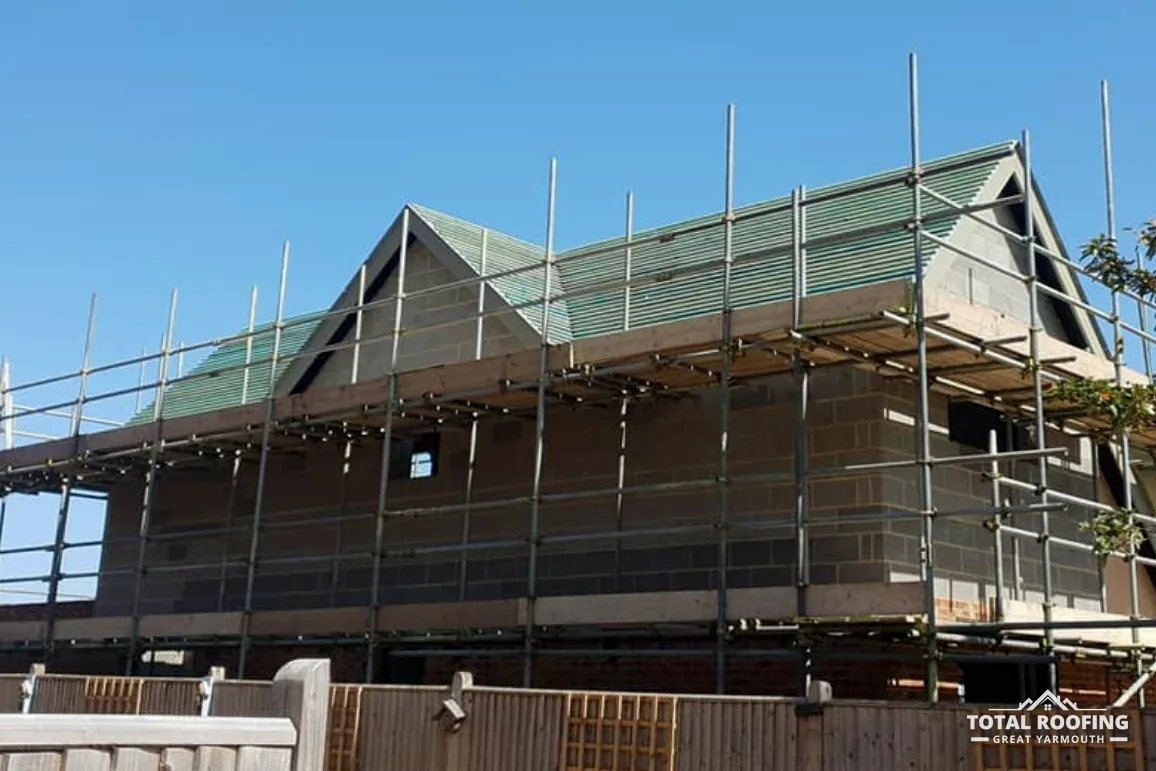
A re-roof is a sequence, and each stage has to finish before the next can begin. The scaffold goes up, the old covering is stripped from the slopes, the battens and underlay are checked or renewed, the new covering is laid, and the ridge, hips and verges are finished. The length of the job is the total of those stages, so anything that stretches one of them stretches the whole.
- Size and shape: a larger roof means more area to strip and cover, and every hip, valley and dormer adds detailing.
- The covering: slate, clay tiles and concrete tiles are each laid to their own gauge and fixing pattern.
- Hidden timber: rotten battens or damaged rafters only show once the old covering is off.
- Chimneys, lead and roof windows: each one needs flashing work around it.
- Weather: wind and showers can halt work on a stripped slope.
A figure given over the phone is a guess, because nobody has looked at the roof. At Total Roofing Great Yarmouth our survey covers every slope, the ridge, the valleys and the lead, and whatever it turns up beyond your first worry gets named in plain words before the plan is set.
What happens before the scaffold goes up
Some of the waiting happens off the roof. A scaffold over the footway or road is licensed by the county council; we arrange the licence with our scaffolder. The council's own processing time then comes ahead of any roof work: Suffolk County Council asks for 10 working days' notice, and Norfolk County Council asks applicants to allow 7 calendar days, so the starting line depends on which side of the county border the house stands.
A licence is granted for a set period, four weeks in Suffolk and 28 days in Norfolk, and both counties offer extensions, so the end of a licence period does not force a scaffold down halfway through a job.
Your own paperwork has a clock as well. A contract agreed at your own table after the survey comes with 14 days for cooling off, and the regulations word it so: "the cancellation period ends at the end of 14 days after the day on which the contract is entered into". To begin sooner you must ask in writing. Asking does not end the right to cancel; money for work already done can still fall due.
A complete re-roof reaches past the halfway mark of the roof, so it cannot use the Planning Portal's no-application test, which needs "Less than 50 per cent of the roof is affected". Before work starts we check the building control route with the council.
How the stages run on site
| Stage | What happens | What can hold it up |
|---|---|---|
| Scaffold | Erected around the house, with a licence where it sits on the footway or road | The council's processing time |
| Strip | The old covering comes off, slope by slope | Rain, wind, an unexpected layer of asbestos cement |
| Battens and underlay | Timber is checked, bad lengths replaced, a new layer laid | Rot, or a new gauge that needs fresh battens |
| Covering | New tiles or slates are fixed from the eaves upward | Wind, or a roof with many hips and valleys |
| Finish | Ridge, hips, verges and flashings are completed | Chimney and lead detail |
Working a slope at a time keeps the open area of the house as small as the work allows. Until the covering goes on, the weather is kept off the rooms below by the underlay and battens alone, which is why a wet forecast changes the order of the day.
HSE's guidance reads "If the building was built or refurbished before 2000, assume that there is asbestos in it", and its A14 guidance calls AC roofs "always fragile". If sheets of that kind turn up, the plan changes before anything else is stripped.
Asking a firm for the dates
When you compare quotes, ask for a written start window rather than a promise of a particular day, because the licence, the weather and the first day of stripping all move it. Then ask what happens to the timetable if rain arrives mid-job, and who will tell you.
- Is a scaffold licence needed, and how long does the county council take to process it?
- What happens to the dates if rotten timber is found?
- How is an open slope kept covered if the forecast changes?
- Does the new covering have a fixed gauge that calls for new battens?
A date that never moves is a warning sign rather than a comfort, since none of those variables can be known on the day the quote is signed. A fair answer names them and says how any change will be passed on to you.
Our re-roofing process guide walks through the stages in order, and new roof cost lists dated published prices. Both sit under our roof replacement page.
