
The short answer
Yes, many repairs can be done in winter, but the method has to suit the weather. Replacing tiles and fixing dry-fix parts is less affected by cold than fresh mortar or torch-on felt. A temporary repair can keep water out until conditions allow the proper one.
Repairs that cope with cold and repairs that do not
A roof repair is two things: the work and the weather it is done in. Swapping a cracked tile, refixing a slipped one or fitting a gutter bracket is mechanical, and the materials do not depend on air temperature to set. Those jobs are limited by safety and daylight, not by a cure time.
Other materials care about the conditions. Mortar and cement-based bedding need to harden, and sealants and adhesives are formulated for a temperature range. Torch-on felt, which is bonded to the roof with a flame, needs a dry surface. That is how these materials behave, which is why a roofer chooses the repair to fit the day.
Safety comes first. A wet or frosted slope is a poor place to stand, and short days leave less light to work in. A job that can be done in summer without a second thought may be put off in January for those reasons alone. Ladders and slopes are riskier in cold, wet weather, whoever is using them.
Mortar, frost and the dry-fix alternative
Fresh mortar contains water, and water that freezes inside it expands. Mortar laid at the ridge, hips or verges in a cold snap can be damaged before it has hardened, and the bed that results is weaker than the one intended. That is how masonry behaves in general, not a published threshold, and it is why bedding in winter depends on the weather ahead, and a roof that can safely wait may be left for a milder spell.
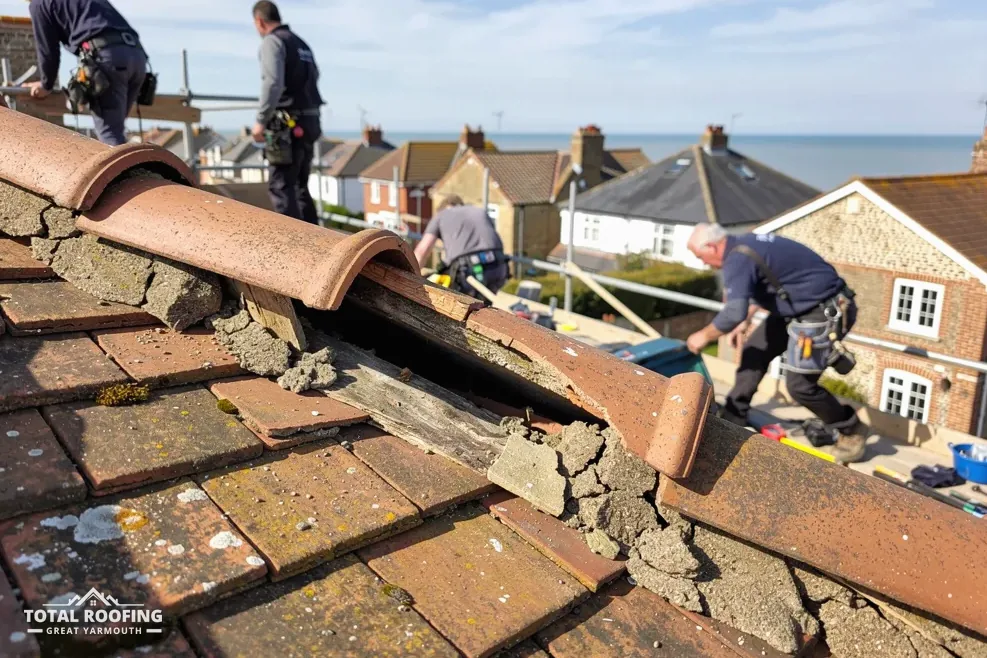
Dry-fix systems sidestep the issue. BS 8612:2018 covers systems for dry-fixing ridges, hips and verges, which are held by fittings and fixings, not by a bed that has to cure. Marley says that since the 2015 amendments mortar "could no longer be relied upon as the only means of securing the roof covering", so a fixing belongs in the repair either way.
If a ridge or hip is loose in winter, the sensible order is to make the roof safe first and bed later. Our pages on mortar falling off the roof and hip tile repairs go into the choices.
Felt, torch-on and flat roofs in cold weather
A flat roof in felt is dealt with differently from a pitched roof. With torch-on felt the bond is made by flame, and a wet or frosted surface does not take that bond well. Where the surface is damp, a lasting repair has to wait for it to dry.
That does not mean a flat roof leak has to run on. A temporary repair, such as a patch or a covering fixed over the leak, can limit the water until a dry day, and the proper repair then follows. Roof coverings have their own lifespans: HomeBuilding gives felt 10-15 years and Less says torch-on felt lasts 10 to 20 years depending on quality and installation, so an old felt roof in winter may be a repair-or-replace question.
- Pitched roof, loose tile: tile replacement can go ahead if it is safe to reach.
- Ridge or hip bedding: dry-fix or a temporary hold until conditions suit mortar.
- Felt roof: temporary patch now, lasting repair when the surface is dry.
Temporary repairs, insurance and cost
A temporary repair is a holding measure. The aim is to stop water entering, and the survey then decides the lasting fix. If the damage follows a storm, photograph it before anything is moved. The Financial Ombudsman Service says "Rain, hail or snowfall by itself can constitute a storm", which matters when a winter leak follows bad weather.
For emergency call-outs, MyJobQuote says costs typically range from £150 to £300, while extensive storm damage repairs can cost £1,200 or more (22 October 2026). They come from a third party and are not our prices. From us you get a single written price once the roof has been surveyed, which sets the temporary repair and the lasting one side by side. A photo sent to 07880 284133 on WhatsApp shows what a temporary repair would need to cover, and a second photo after the weather has passed shows whether anything has moved.
The roof repair cost page lists the published prices by job, and the roof repairs hub has the rest.
