
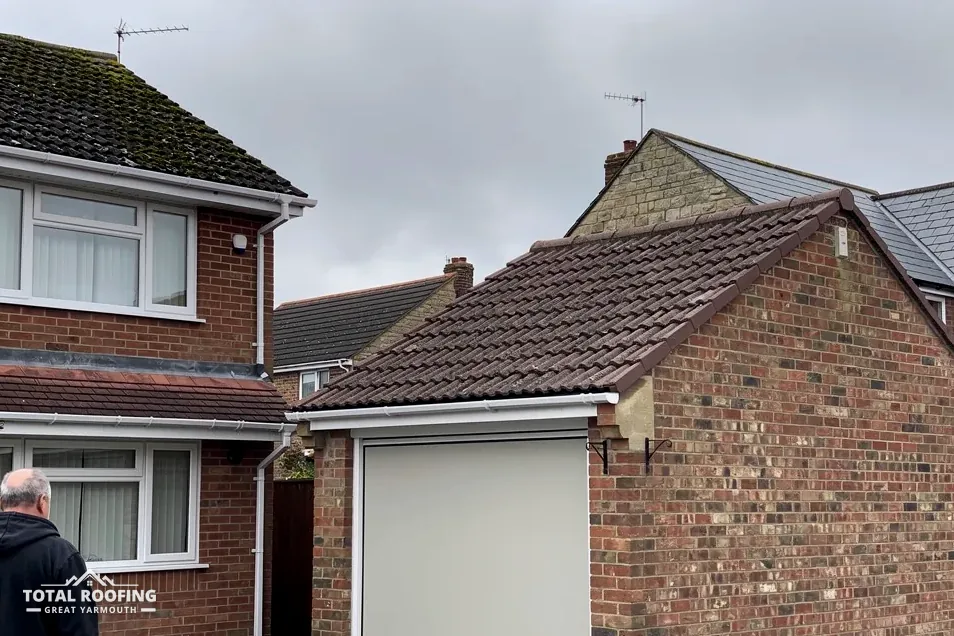
What a roof condition report is
A roof condition report is a written record of a roof on one day. Somebody has been up and looked, has seen what is there, and has set it down: the covering, the edges, the flashings, the gutters and the loft timbers. It describes, it dates and it is meant to be read by someone who was not there, such as a buyer, a tenant's agent, a managing agent, a lender or an insurer.
The purpose differs from a repair visit. A repair visit looks for a fault and prices the cure. A condition report records the state of the whole roof, including parts that are sound, so that a reader can see where things stand without climbing up. It may mention faults, but its value lies in being a fair picture and not an alarm.
A condition report can be wanted at particular moments: before a sale, at the start or end of a tenancy, when a flat's management company wants to know what a roof needs, or when a holiday let changes hands. Our roof repairs page covers the faults and fixes; this guide covers the record. It also helps to know the difference between a record that merely says a roof looked fine and one that gives a reader reasons to believe it, and the sections below show how to tell them apart.
What a written report states
A useful report is specific. It names the roof or the slope it describes, gives the date of the inspection and says what could and could not be seen. It describes the covering and its state, the ridge, hips and verges, the valleys and flashings, the chimney, the gutters and the loft. Findings are tied to a place, so that a reader can find the cracked tile or the lifted lead again, not just read that something was found.
Photographs help when they are labelled with where they were taken. A picture of a split valley lining means little without a note of which valley, and a general picture of a roof from the road proves nothing about a loft. The same goes for the wording: "some wear" tells a reader nothing, whereas a named fault with a location and a stated cause gives them something to act on.
A good report also says what it recommends, in plain terms, and separates what needs doing soon from what can be watched. And it states its limits. A roof inspected from a ladder and a loft hatch cannot show what lies under every tile or behind spray foam, and a report that pretends otherwise is the weaker for it.
What to expect a report to state
- The address and the date of the inspection
- Which parts of the roof were looked at
- Each fault, with its location and likely cause
- Work recommended, and how soon it matters
- What could not be seen, and why
- Photographs tied to places on the roof
Reading a report you have been handed
If a report arrives from an agent, a seller or a previous owner, read it with a few questions in mind. Who wrote it, and what did they look at? A report from a person who went into the loft and walked round the roof carries more weight than one written from the road. Check the date against anything that has happened since. And check whether the address and the roof it describes are the ones you are dealing with, since an extension can have its own roof that a general report skips.
Look at how findings are worded. A named fault with a location, such as a lifted lead flashing at the chimney, can be checked and priced. A phrase such as "general wear" cannot. If something is flagged as urgent, ask what would happen if it were left, and if something is described as fine, ask how that was established. Our guide to what a roof inspection covers lists the parts a thorough look takes in, so you can see what a report has and has not mentioned.
Then decide what to do with it. A report that lists repairs can be turned into work that is priced against the description, and our roof repair cost guide sets out published ranges and what moves a price. A report that finds nothing urgent is a useful record to file. Either way, the roof you own is what matters, so a survey of your own roof is worth having if the report is old or from a source you cannot check.
Landlords: what to provide for a roof inspection
A landlord who wants the roof of a let house or flat looked at has a practical job to do first: arrange access. Check the tenancy agreement for what it says about entry, and give the tenant written notice of the visit with a date and a time window. If the loft hatch is inside the home, or the only way to a flat roof is through a bedroom window, the tenant's cooperation is needed, so explain what the visit is for.
Pass on what you know. Earlier leaks, previous repairs, work done by a past owner, and complaints from tenants about damp patches or drips all tell the roofer where to look and save time on the day. If an agent manages the property, copy them in, because they may hold records of repairs the landlord has never seen.
The law gives landlords a reason to keep the roof in order. Under the Landlord and Tenant Act 1985 section 11, a landlord who lets a home on a short lease or tenancy must keep the structure and exterior in repair, and a roof is part of that. A written record of the roof's state, kept with the tenancy papers, shows what was found and when, which is useful if a tenant later reports damp.
Arranging a roof inspection on a let home
- Check the tenancy terms on access.
- Give the tenant written notice of the visit.
- Share known leaks and past repairs.
- Make sure the loft hatch can be reached.
- Keep the written record with the tenancy papers.
Sellers and buyers: the roof in a sale
A buyer's survey will comment on the roof, and a comment such as "the roof should be looked at by a specialist" can hold up a sale. A seller who has had the roof looked at beforehand knows what the buyer's surveyor may raise and can answer it with facts: this is what was found, this is what has been done, and this is what remains. That turns a worry into something both sides can price.
Spray foam is a particular case. RICS says there has been "concern within specific sectors of the lending market, such as equity release mortgages", and its consumer guide advises: "Do check with your mortgage provider whether their lender policy allows the installation of such products." Government guidance takes a measured line: "Many mortgage providers are open to lending on properties with spray foam, subject to their own requirements." Removing foam "will not always guarantee that they will still lend", so a seller facing the question should take advice from a specialist surveyor.
If a roof is old, say so. A report that gives the covering's age is only a start; the figure that matters is how much life is left, and no one can promise that. Marley says: "Typically, roof tiles are expected to last for around 60 years", and adds that "This is not a guarantee or warranty of its longevity." Treat any lifespan as a guide, and let the recorded condition do the talking.
Flats, holiday lets and seafront homes
In a block of flats the roof can belong to everyone and no one in particular. The lease sets out who arranges and pays for roof repairs, so check it before asking for a report, and check whether the freeholder or management company has already commissioned one. Flat owners have no householder permitted development rights, so planning questions about roof alterations go to the council before any work is planned.
A holiday let has its own timetable. The roof can be looked at between bookings, when the loft hatch and the top-floor rooms are free, and a leak that appears during a stay is a problem for guests as well as the owner. A dated record of the roof's state helps an owner show what condition the property was in when the season began.
Flats and homes near the seafront bring exposure into the picture. Marley says BS 5534's minimums "will always be superseded by the generation of a Fixing Specification, which is site specific", and a roof's fixings are calculated for the site's exposure, so a report on such a roof should say what fixings the covering has. Where scaffold would stand on the footway or carriageway for a close look, a Highways Act 1980 s169 licence comes from the county council, and we arrange the licence with our scaffolder.
What a report cannot promise
A report is a statement of condition on one day, and it ages. A roof assessed as sound in spring may have a slipped tile by winter, and a report from three years ago says little about what a storm did last week. Treat the date on the page as part of the finding, and expect to refresh the record when something changes, such as a sale, a new tenancy or a storm.
It cannot see everything. It cannot see through tiles to the nails beneath, or judge a timber that looks fine on the surface and has gone soft in the middle. Hidden faults appear when the covering is lifted. A report that records these limits honestly is more use than one that treats a ladder view as the whole truth.
It also cannot settle an insurance claim. The Financial Ombudsman Service says: "we'll usually look at expert reports and photos" when it considers a storm complaint, which is one reason a dated record of the roof is worth keeping, but the insurer's decision rests on the policy and the cause of damage. Take photographs of storm damage ahead of anything being moved, and tell the insurer. If a claim is refused, the Financial Ombudsman Service has its own number, 0800 023 4567, and allows a business up to 8 weeks on most complaints before you can take one further.
Myth
A clean roof report means the roof will last another ten years.
Fact
It records condition on one day; lifespans are guides, never promises.
