
The short answer
Wash uPVC fascias and soffits with warm water, a mild detergent and a soft cloth or sponge, then rinse. Keep solvents, abrasive pads and scouring powders away from the surface, and do not climb to a height you cannot work from safely. Soffit boards in an older house may contain asbestos, so check before scrubbing.
What cleans uPVC and what damages it
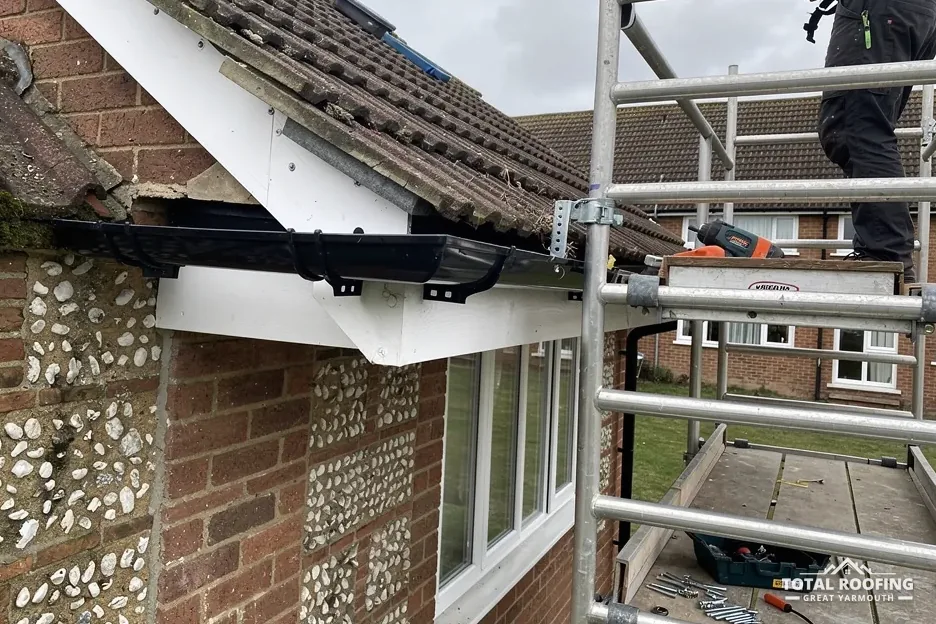
Fascias and soffits are the boards along the eaves. The fascia is the vertical face that carries the gutter, and under the overhang the underside is boarded with soffit. uPVC is a smooth plastic, so dirt sits on top of it rather than soaking in, and a gentle wash lifts what settles there.
A bucket of warm water with a small amount of mild washing-up liquid, a soft cloth or sponge, and a clean rinse is enough for dust, cobwebs, road film and light algae. Work along one board at a time and rinse before the soap dries, or it leaves streaks.
What to keep away from the boards matters more than what to use. Solvents, white spirit, abrasive pads, scouring powders and wire brushes all scratch or dull the glossy skin. Once that skin is scratched, dirt clings to the roughened surface and the board looks grubby again sooner than before. Strong jets of water are also a poor choice for boards, because they can force water into the joints and behind the fascia, where the timber backing board sits.
The same method works on the gutter's outer face and the downpipes, which collect the same film. Dry the boards with a clean cloth if the sun is out, because water left to evaporate on a dark or gloss finish can leave marks.
Reaching the boards from a safe height
The difficulty with fascias is where they are, not how dirty they are. On a bungalow or a ground-floor extension, an extendable pole with a soft brush head lets you wash the board from the ground and keeps your feet on the floor. On a two-storey house the fascia is a long way up, and leaning out from a ladder to scrub it is how people fall.
If a ladder is the only way, it needs firm, level ground, a second person to foot it, and you never reach sideways off the rungs. Beyond that height, an access tower or scaffold is the safe tool, and it is the reason window cleaners and roofers charge for roofline work.
The county council issues the licence for scaffold or a tower set up on the highway, and we arrange the licence with our scaffolder. It also makes sense to combine the wash with other roofline work, such as gutter cleaning, so the access is set up once and used for both.
When the stain will not wash off
Cleaning also shows what is wrong with a board. Look closely once it is clean:
- Hairline cracks or splits, especially at joints and corners.
- Warping, where the board bows away from the wall or the gutter.
- Gaps between a soffit and the wall, or between board ends.
- Black spots or soft patches that remain after washing, which suggest the timber behind is damp.
- Yellowing that does not shift, which is the plastic itself ageing.
One uPVC retailer puts the working life of a correctly installed roofline at between 20 and 40 years. Beyond that, or where the board behind has gone soft, washing only makes a tired board presentable. Our page on fascia capping against replacement explains the choice between covering sound timber and renewing the whole board. A clean board also makes the next check easier, because new cracks and gaps stand out against a clean surface instead of hiding in grime.
Older soffits and asbestos
Age matters here. HSE's advice for a building built or refurbished before 2000 is to presume asbestos is somewhere in it. Its list of materials includes asbestos insulating board in white panels under the eaves, which is soffit board, and a damaged soffit of that kind is a particular concern.
On an older house, a flat white soffit that is not uPVC should not be scrubbed, sanded, scraped or jet-washed until you know what it is. Disturbing it can release fibres. Specialist asbestos contractors carry out the greater part of work on that board, so it is a job for one of them, and a survey of the roofline can tell the two materials apart by looking at how the board is made and fixed. If a soffit looks cracked, broken or crumbling, leave it alone, keep people away from underneath it and get advice. The guttering, soffits and fascias hub links the related pages.
