
The short answer
Yes, foam can end up holding tiles on, because it sets against their undersides and bonds them to the battens. Removing it can free tiles that were sticking rather than fixed. A survey checks which tiles the foam carries, and In its October 2026 paper, DESNZ links improper removal with the risk of more problems afterwards.
How foam ends up holding the covering
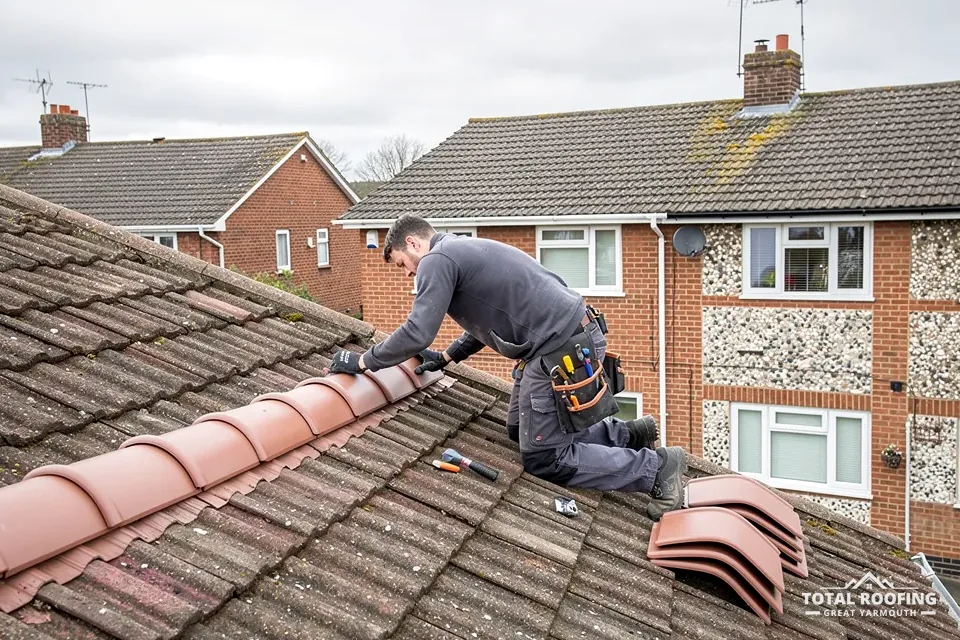
Foam was sprayed to insulate, and gluing was never its stated purpose, yet a material that expands and sets hard will bond to whatever it touches. On a roof, though, it expands into every gap it can reach, and where that includes the space between a tile and its batten, it sets into a solid bond. A tile or slate that had loosened, with a rusted nail or a broken fixing, can be held in place by the foam alone.
In some cases the foam went on over a covering that was already tired, and the spray covered the faults. A slipped tile, a split slate or a missing clip is then stuck where it sits, and everything looks tidy from the street. The foam has done a repair nobody planned and nobody can inspect, and the owner may not know it exists until a surveyor, a buyer or a lender asks about the roof.
Our page on how spray foam is removed explains how the foam is worked off the underside of the roof. Where it holds the covering, that step needs the most care of all.
What removal can reveal
RICS says that timber structure covered with spray foam "cannot be fully seen or inspected", and the same is true of the covering's fixings. Once the foam comes away, the fixings can be seen, and the picture is sometimes different from the one the roof presented from outside.
What a survey of the freed roof may find:
- tiles or slates with no working fixing, which were held only by foam;
- cracked or slipped pieces that the foam had masked;
- battens that are soft or split where fixings no longer grip;
- underlay that has been pierced or torn by the spray;
- lead and flashings that have lifted.
This is not a reason to avoid removal. It is the reason to survey first: a roof that depends on foam to stay together needs a plan for the covering before the foam goes, not afterwards, so the owner is not handed a surprise bill halfway through the work.
Removing foam without losing the tiles
DESNZ warns that improper removal "could lead to further issues", and a roof with foam-bonded tiles is a clear example. If the foam is cut away without thought, tiles can shift, crack or slide, and the weather can reach a roof that was dry the day before.
A careful approach separates the foam from each tile or slate in turn, notes which ones were carrying load and refixes or replaces those pieces. Sometimes the answer is a handful of new tiles or fresh fixings, found and priced after the survey and before the work begins. Sometimes the covering has aged to the point where partial repair is false economy and a larger job is proposed, which our page on re-roofing after spray foam removal sets out.
Either way, the decision comes from what the open roof shows, and a quote given without looking at the tiles cannot reflect it. Put the question of bonded tiles to any firm you consider, and ask how it will tell you if the count turns out higher than expected, before the extra work is done rather than after.
Getting the roof looked at before you decide
Start with advice. DESNZ says that before any decision about your spray foam you should take advice from a specialist surveyor, and your lender's requirements apply too: removal "will not always guarantee that they will still lend". A roofer's survey then covers the part the specialist surveyor may not reach, which is the state of the covering and what holds it, with each tile looked at from both faces where access allows.
Before pricing, Total Roofing Great Yarmouth goes over the whole roof, tiles included, and reports anything else it spots. You then receive a single written total. To begin with a distant view, send photographs of the roof slopes and the loft to 07880 284133 on WhatsApp.
The wider service is described on the spray foam insulation removal hub, and the pages linked from there cover the foam's other effects on a roof, from moisture to the timbers, so you can read on at your own pace before any decision is made.
