
The short answer
Catch the water, move belongings, switch off any wet electrics and photograph what you see. If the loft is reachable, look into it from the hatch and stay on the joists. Keep off the roof itself and ring a roofer, because a leak stopped from the inside is only paused.
Contain the leak inside
Start where the water arrives. A bucket under a drip, with a folded towel in the base to take the splash, does more good than any search for the cause. Where water runs down a wall instead of dripping, lay towels along the skirting and take pictures frames, rugs and anything electrical away from it.
A short run of checks keeps the damage from spreading:
- Note which room and which part of the ceiling or wall is wet, so you can describe it later.
- Move furniture and electronics away from the wet area.
- If water is close to a light fitting or socket, turn that circuit off where the fuses are. Our answer on a roof leak near a light fitting goes through that case.
- Photograph the wet area, with something in the frame that shows scale.
These steps hold the damage in place. They do not mend anything, and the leak is still there when you have finished.
What the loft can tell you
Where the house has a loft, a torch and a look from the hatch can narrow the search. Shine the light along the underside of the roof covering. Dark, damp timber, a drip falling from a batten or a patch of daylight where there should be none each points to a place.
Keep to the joists, or to boards laid across them. The ceiling below is plasterboard and will not take your weight, and loft insulation hides where the joists run. Do not go up at all if the hatch is awkward, the loft is full of stored belongings or you are alone and unsteady. A photograph taken from the hatch is better than a fall.
Where you find the damp, mark the spot and note what is near it: a chimney, a vent pipe, a valley between two slopes or a rooflight. Water can run a long way along timber before it drips, so the place it falls is only a clue. The roofer works from your note and then checks the whole roof, which is how the real opening is found.
What to leave to the roofer
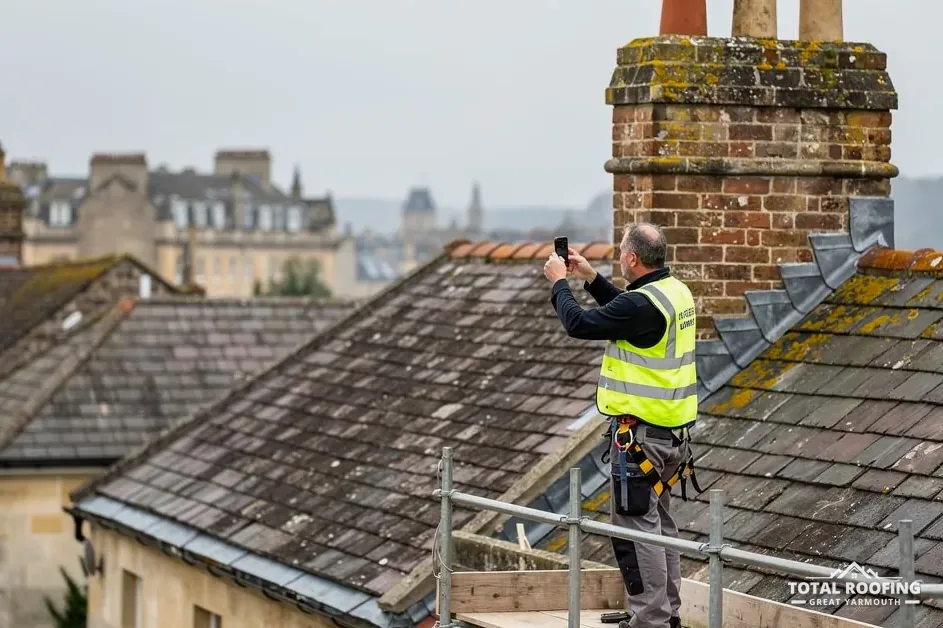
Wet slates, tiles and flat roof felt are slippery, and the ground gives a poor view of what has failed. Binoculars from the garden, searching for slipped or missing tiles and a displaced chimney pot, are as far as a householder should go. Climbing up with a tube of sealant can trap damp under the repair, and it risks a fall. Ladders on wet ground slide, and a roof surface that looks sound from the eaves can still be wet underfoot and slick with moss or algae, so the safest view is the one from the ground.
A temporary measure, such as a sheet fixed over the damaged slope, is work for someone with the equipment to reach the roof safely. Its job is to hold off the weather until a lasting repair can be priced, and temporary to permanent roof repair explains how the two stages fit together.
If the leak followed a gale, the guide to making a roof safe sets out what a make-safe visit is meant to achieve, and why a sheet over the slope is a holding measure and not a repair. A temporary cover also buys time to work out the real cause, which matters when the first guess about where the water is entering turns out wrong.
When to ring, and what to have ready
Ring when water is coming in and you cannot stop it, when a ceiling sags, when tiles are off after wind or when you spot daylight in the loft. For a slow, damp patch with no active drip, a call can wait for a sensible hour on a working day, though the damage keeps growing, so do not leave it for weeks.
Total Roofing Great Yarmouth can be reached on 01493 277103, and you can message photos of the wet ceiling, the loft and the outside of the roof to 07880 284133 on WhatsApp. Have your notes ready: which room, how long it has been going on, and whether it follows rain or wind. Before any price, we survey the entire roof and report anything else we notice. The quote that follows carries one total, so you are comparing a single figure and not a stack of separate ones. If you would like to know what a call to us involves, it starts with those photos and your notes, and the survey sorts out the rest.
