
The short answer
Move guests out of the affected room, contain the water and take dated pictures of the room before you clear anything. A make-safe holds the roof until the permanent repair, which follows a survey and can be planned around your bookings. Tell the insurer early, because a business policy has its own wording.
Guests first: the room, the electrics and the conversation
The first job is the people in the building. Move guests out of any room with water coming through the ceiling or running down a wall, and keep everybody clear of a ceiling that is bulging or sagging, because wet plaster can fall. Where water has reached the lighting, the sockets or the fuse board, have that circuit isolated at the consumer unit, and keep guests out of that part of the building until it has been checked.
Then deal with the stay itself:
- Offer another room if you have one that is dry and unaffected, or tell the guest early if you do not.
- Say plainly what has happened and what is being done, rather than leaving a guest to find the bucket.
- Photograph the room, the stain and any damaged belongings before you clear anything away.
- Check the dates of the next bookings in the affected rooms, so you know how long you have to plan.
Handled openly, a leak need not wreck a stay. Keep a note of each conversation with guests, the room they were moved to and any refund or discount you offered, because the insurer may ask for the full picture of what the leak cost you. A guest who is moved quickly and told the truth is easier to keep happy than one who finds a wet carpet.
A make-safe, so the rest of the building can stay in use
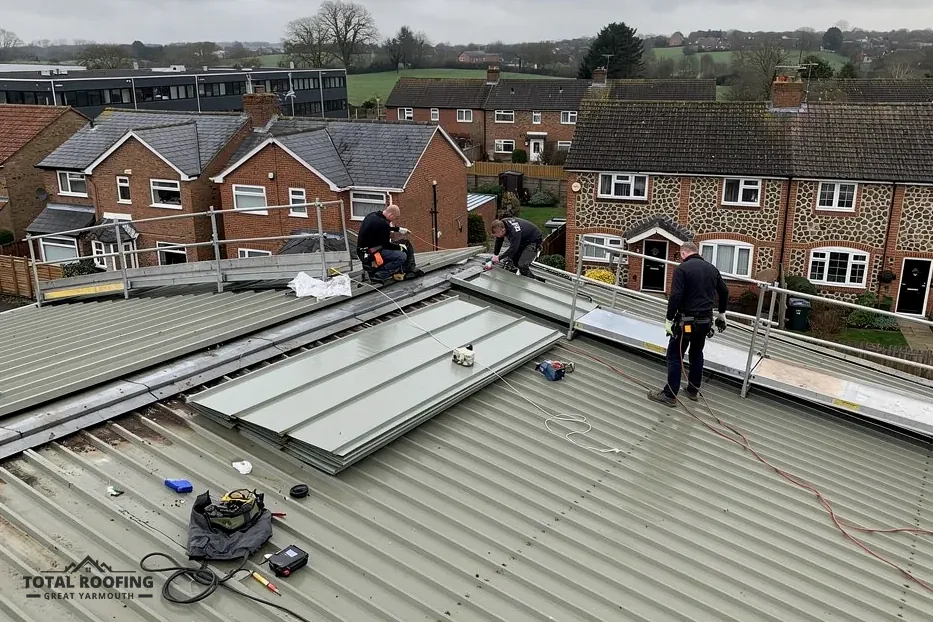
While you manage the guests, a roofer can cover the opening: a waterproof sheet fixed over the damaged part and secured against the wind. It is a holding measure, not the repair, and it lets you decide what can stay open. Our page on making a roof safe explains what it involves and what it leaves for the permanent work.
On the day, the roofer decides if the roof is safe to reach. A tall guest house on a main road may need a tower or scaffold, and one that stands out over the pavement or the road needs a licence from the county council before it goes up. We arrange the licence with our scaffolder. The councils publish their own processing times, so a make-safe that keeps off the highway can sometimes go ahead sooner.
A photo sent on WhatsApp to 07880 284133 is something we can look at before anyone visits, and it shows what the survey should concentrate on.
The insurer, the pictures and the policy
A holiday let or guest house needs a policy written for that use, and that is not the same document as an ordinary home policy. Check the wording for storm damage, for any exclusion for wear and tear, and for whether it includes lost booking income. Then tell the insurer promptly and say what has been done to limit the damage.
The Financial Ombudsman Service says "we'll usually look at expert reports and photos", so dated pictures matter. Take wide shots of each affected room and of the building outside, then close-ups, always from indoors or the ground and never from the roof. Keep every receipt, including for any rooms you rebooked elsewhere for guests, and keep damaged pieces until the insurer has said they are not needed.
Our storm damage and home insurance page sets out how claim and repair run together, and the emergency roof repairs hub sets out the other urgent faults a building can suffer.
Planning the permanent repair around bookings
With the cover on, the permanent repair needs a survey of its own. It covers the entire roof and not merely the patch that leaked, and any other fault is spelled out for you. You receive one written price as a result. With that in hand you can compare the repair with your booking diary and choose a window when the rooms below can be left empty.
Weather and access still decide what can happen on a given day, so a repair date is agreed once the survey is done and not before. If a booking is already in the diary for the rooms below the damaged part, tell us the dates when you send the photographs, because they decide which days are realistic for the permanent work. The permanent work follows the temporary one: see temporary to permanent roof repair for how the stages connect.
As a guide, the MyJobQuote cost guide of 22 October 2026 puts a typical emergency call-out at £150 to £300, and extensive storm damage repairs at £1,200 or more. Those are market figures from a third party, not our prices.
