
The short answer
A spray foam inspection report records the foam type and where it sits, photographs of the roof space, the condition of the timbers, the underlay or membrane, and the insulation that now fills the roof. DESNZ advises taking advice from a specialist surveyor before any decision about foam.
What the report is for
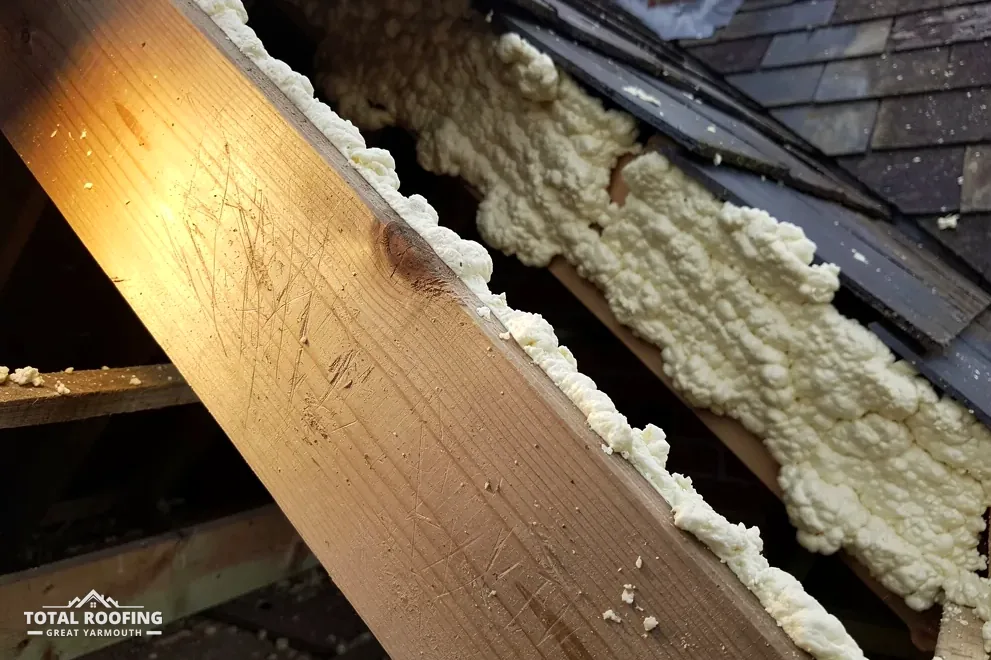
Foam sprayed under a roof hides the structure it was sprayed onto. RICS puts it this way: "If the timber roof structure is covered with spray foam it cannot be fully seen or inspected". A report exists to put that missing picture on paper, so that the owner, a buyer and a lender can all read the same facts about the same roof.
Reports differ in layout from one surveyor to the next, because no single form is set for them. The parts below are worth asking for by name before anyone is instructed. The spray foam removal hub explains the whole service, and our page on spray foam surveys explains who does the looking and what a survey involves.
A roofer's survey and a surveyor's report are different things. Our own survey, before any quote, covers every part of the roof, and what turned up is described in everyday words. A specialist surveyor, whose advice DESNZ recommends before any decision about foam, is the person to write a report that a lender will read.
Photographs and the timber condition
Photographs carry most of the weight in any report on a roof you cannot easily see into. A useful set shows each slope from inside the roof space, with a note of which slope each picture belongs to, close shots of any area where foam has been lifted to look underneath, and the eaves, ridge and chimney surrounds.
The written part should say what the timbers looked like where they could be seen. Ask the author to state, for the rafters, battens and any ceiling joists:
- whether wood was visible, or only foam;
- any dark staining, softness or crumbling;
- moisture readings, if a meter was used, and where;
- how many places were opened up to look.
That last point matters because a small opened patch says little about a whole slope. EST says closed-cell foam "doesn't let moisture pass through it easily", and that the risk to timber "should be much lower with open-cell foam". That is one reason the report should name the foam type beside every timber finding.
The membrane and the insulation fitted
Under the battens of a pitched roof there is normally a layer of underlay, sometimes called a membrane. Foam can bond to it, push through gaps in it or sit directly against it. A report should say whether the underlay can be seen, whether it is torn or perforated, and which type it is, because HR (high resistance) underlay does not pass vapour and relies on air moving at the eaves. Marley gives 25 mm along the eaves at 15° or less and 10 mm above 15° for a cold roof with that kind of underlay.
The same section should describe the insulation itself: open-cell or closed-cell, the depth where it could be measured, whether it covers the rafters only or also the gable walls and the loft floor, and whether any older insulation lies beneath it.
On a flat roof the report should say whether the foam sits between joists under the deck, since the removal route differs from a pitched roof. Those details tell a roofer what removal would involve and what has to be fitted afterwards. They also tell a lender what was done to the building, and when, which can matter to a buyer's solicitor as well.
What lenders and surveyors ask
The official wording is measured. RICS reported in March 2023 "concern within specific sectors of the lending market, such as equity release mortgages". DESNZ, in a policy paper published on 22 October 2026, says: "Many mortgage providers are open to lending on properties with spray foam, subject to their own requirements." It adds: "Removing the foam will not always guarantee that they will still lend, and improper removal could lead to further issues."
EST, last updated on 5 November 2026, says foam "doesn't automatically prevent you from getting a mortgage, but some lenders may ask for extra checks". A report is one form those checks take, but each lender sets its own requirements, so ask yours what it wants to see before paying for anything.
Questions a buyer's surveyor may put to the report's author include the foam type, who installed it and when, whether the timbers were seen and the extent of any opened-up areas. Our page on timber condition under foam covers the findings that bring removal into the discussion.
