
The short answer
Yes, in the sense that the roof can be repaired: the cracked tile is taken out and a matching one fitted in its place. Sealing the crack leaves a weakened tile in the slope. A survey checks the tiles around it and the battens under it before anyone quotes.
Why a crack means a swap, not a seal
A roof tile does one job: it carries rain off the slope and out to the gutter. A crack through the tile gives water a way through to the underlay beneath, and the underlay is a backstop rather than a second roof. A bead of sealant or a smear of mastic across the split may hold for a while, but the tile is still weakened, the crack can move with each change in temperature, and the sealant can hide the extent of the damage from anyone looking up from the ground.
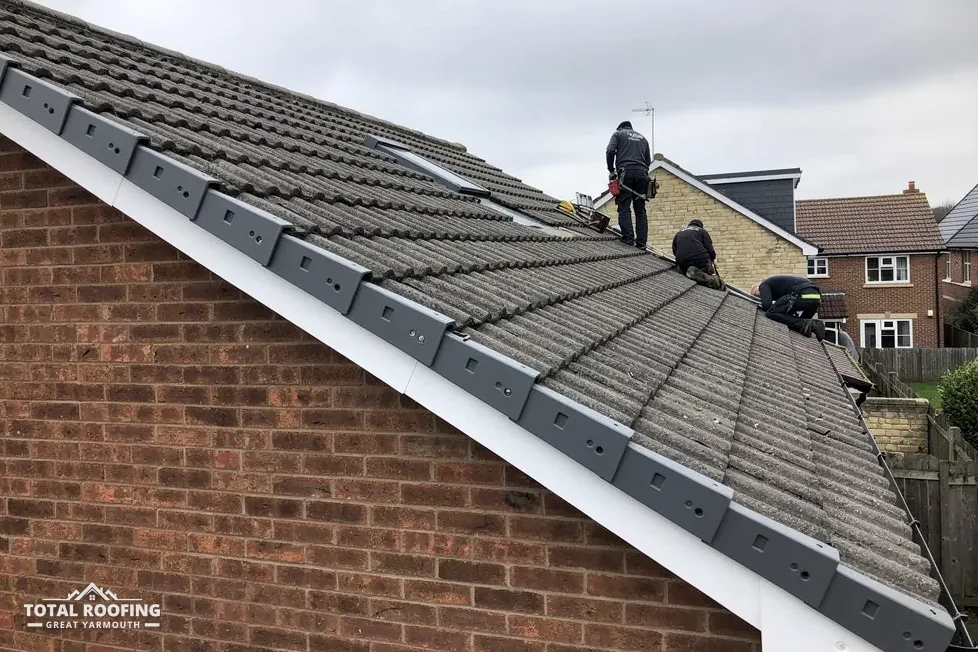
Replacement is plain work in principle. The cracked tile is released from the tiles overlapping it, lifted out and replaced with a matching tile, which is then fixed. Whether the tile is nailed, clipped or held by its own nib depends on the product and the roof, and the neighbours have to be lifted gently so they are not cracked in turn.
That last point is why this is not a job to rush. A tile that has cracked once may be telling you about the tiles around it, the battens under them or a fault in the fixings. Because the survey covers the entire roof, one cracked tile is judged against the slope around it. The wider topic is covered on our roof repairs hub.
Matching the tile that is already there
A replacement has to fit the roof it joins. Its profile, size and headlap decide whether it lies flat on the battens and overlaps its neighbours correctly, and its colour decides whether the new tile stands out for years. Weathering matters here: a new tile beside tiles that have aged on the slope will look different until it catches up, which is a point about appearance and not about weather-tightness.
Pitch limits come from the manufacturer. Sandtoft publishes a minimum pitch of 30 degrees and a 75 mm headlap for its clay Old English Pantile. Marley gives 15 degrees to a different product, its Lincoln clay pantile. Each figure belongs to one product only, so the data sheet for the tile in question is the one to read.
Weight is worth a thought. A new covering "15 per cent or more" heavier needs Building Regulations approval under the Planning Portal's guide, and that concerns a whole slope. One tile does not move that figure, but a run of replacements in a different material can start to. If the original tile cannot be found, our survey will say whether a reclaimed or near-match tile suits or a larger repair is the better route.
Reaching the tile: ladder or scaffold
Where the tile sits decides how it is reached. A cracked tile low on a single-storey roof may be reached from a ladder footed on firm ground. A tile above a porch, on a steep slope or near a ridge asks for more. Working from a ladder leaned on a gutter puts weight on a part that was never meant to carry it, and the step from the top rung onto wet tiles is where a slip becomes a fall.
Scaffolding on the pavement or road needs a highway licence from the county council, and we arrange the licence with our scaffolder. Scaffold, where a job needs it, is part of the written quote.
- Low eaves tile: ladder access may be enough.
- Tile above a porch, bay or higher storey: scaffold or a tower is the safer route.
- Tile on an unidentified sheet roof: stay off it. HSE says "AC roofs are always fragile", and that a building built or refurbished before 2000 should be assumed to contain asbestos.
Our page on slipped roof tiles covers the neighbouring fault, where a tile has moved but is not cracked.
What published prices say about tile repairs
Prices come from third parties and are not ours. Which? Trusted Traders priced the replacement of one to six damaged or absent tiles at £75 to £400, excluding VAT (November 2025). From MyJobQuote comes an average of around £650 for a roof repair (6 October 2026), with no VAT basis given.
Checkatrade works per square metre. Its June 2026 repair table says pitched clay tile roof repairs can cost £110 to £160 per m², and natural slate repairs around £190 per m², exclusive of VAT. Those are rates, and the area a repair covers is found on the roof, so a rate alone does not add up to a job total.
A rate such as that is a guide to scale. What you receive from us, once the survey is done, is one written total price for the work in hand. The roof repair cost page sets the published ranges by job.
