
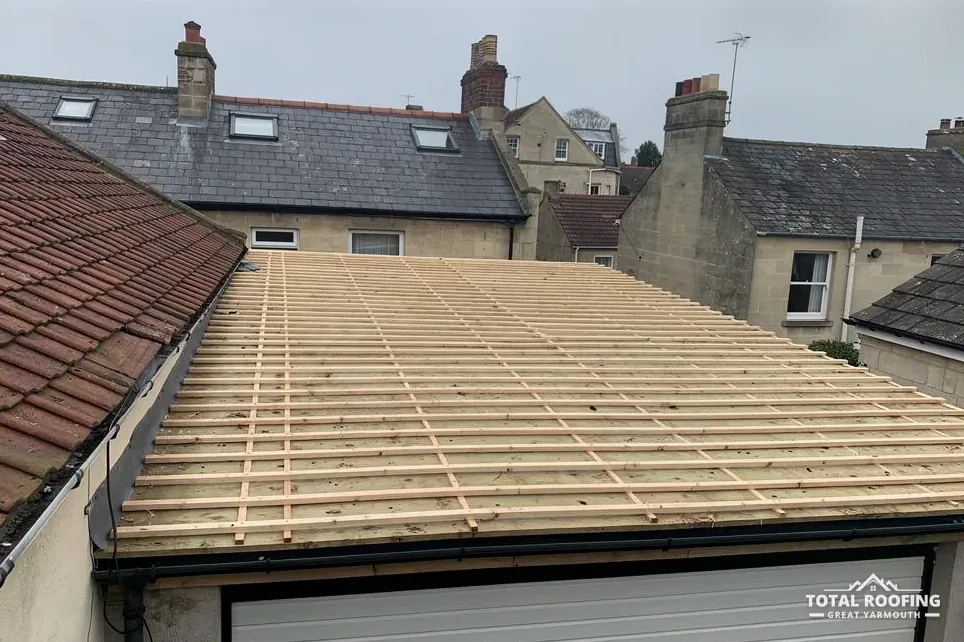
The short answer
Stop further damage now: cover the opening, contain the water indoors and photograph everything. The permanent repair follows a survey of the roof, and its timing comes from that survey, not from a promise made on the phone. Report the damage to your insurer promptly, because a policy may ask you to limit further harm.
Stopping more damage comes first
Water that keeps getting in turns a small repair into a larger one. Wet insulation loses its value, plaster swells and stains, timber that stays damp can rot, and electrics near the wet become a danger. So the first job after a storm is a holding measure: a temporary cover over the opening, and containment of the water indoors.
From where you stand, the useful steps are:
- Make sure everyone is safe and keep clear of anything hanging off the roof.
- Catch drips, move belongings and keep away from wet electrics.
- Take dated pictures of the damage, inside the house and out in the garden, before you shift anything.
- Report it to your insurer, and get a roofer to come and look.
A make-safe is a stopgap and not the repair itself. Our page on making a roof safe explains what it covers and what is left for later. If you send a photo on WhatsApp to 07880 284133, we will look at it.
Why the permanent repair waits for the survey
Storm damage does not always stop at the visible gap. A missing tile can mean a cracked batten beneath it, a torn piece of felt, a lifted ridge or a loosened flashing nearby. Fix only the tile and the next gust, or the next downpour, can find the weakness you did not see. That is why permanent work begins with a look at every slope, not only the spot where the damage showed.
Our own order is the survey first and the quote second. Other faults found at the survey are explained plainly, and the price arrives as one written total.
Rushing the permanent repair in bad weather does nobody a favour. Fixings, felt and flashings are better done on a dry roof in settled conditions, and a hurried job on a wet deck can trap moisture. Our temporary to permanent roof repair page explains how the two stages join up. The weather and the access decide what can be done on any particular day, and the roofer judges that when the time comes.
What insurers look for on timing
Policies differ, but the wording may ask you to report damage promptly and to take reasonable steps to prevent further loss. Read the conditions section and follow it. A policy may treat damage that grew because a leak was left open differently from the damage the storm itself caused.
The Financial Ombudsman Service gives its own picture of what it examines: "a storm usually involves violent winds, usually with rain, hail or snow". It adds that "we'll usually look at expert reports and photos". Dated pictures taken on the day of the storm are therefore worth more than any later recollection of what the roof looked like.
Wait for the insurer's go-ahead before permanent work begins, unless leaving the roof as it is would cause further harm. Our storm damage roof repairs page sets out how a repair and a claim run in step. If the insurer wants to send its own surveyor first, the roof stays covered in the meantime, and you should ask the roofer to leave the damaged pieces where the surveyor can see them, unless they may be asbestos cement, which should be left alone.
Published storm repair figures
For scale, here are third-party figures, with their sources and dates. They describe the market, not our prices, and none of them stands in for a written quote on your own roof.
| Item | Figure | Source and date |
|---|---|---|
| Emergency roofer call-out | typically £150 to £300 | MyJobQuote, 22 October 2026. |
| Extensive storm damage repairs | £1,200 or more | MyJobQuote, 22 October 2026. |
| One to six broken or missing tiles replaced | £75 to £400 | Which? Trusted Traders, November 2025, excluding VAT. |
The gap between a few tiles and extensive storm work shows why a survey comes first: the size of the job is only known when the roof has been examined closely, including the battens, the felt and the lead, and the same survey is what produces your written price. A small job can turn out larger once the covering is lifted, and a large-looking one can turn out smaller. The hub page on emergency roof repairs covers the whole range of urgent faults.
