
Call 01493 277103

Stoke Holy Cross, 22.5 miles west

Roofers in Stoke Holy Cross

The road from Great Yarmouth to Stoke Holy Cross runs 22.5 miles west, and the village has a conservation area designated by South Norfolk Council. Each slope gets a proper look, you hear plainly what was found, and the council is asked about your address first.

Get a written quote

Call 01493 277103WhatsApp us

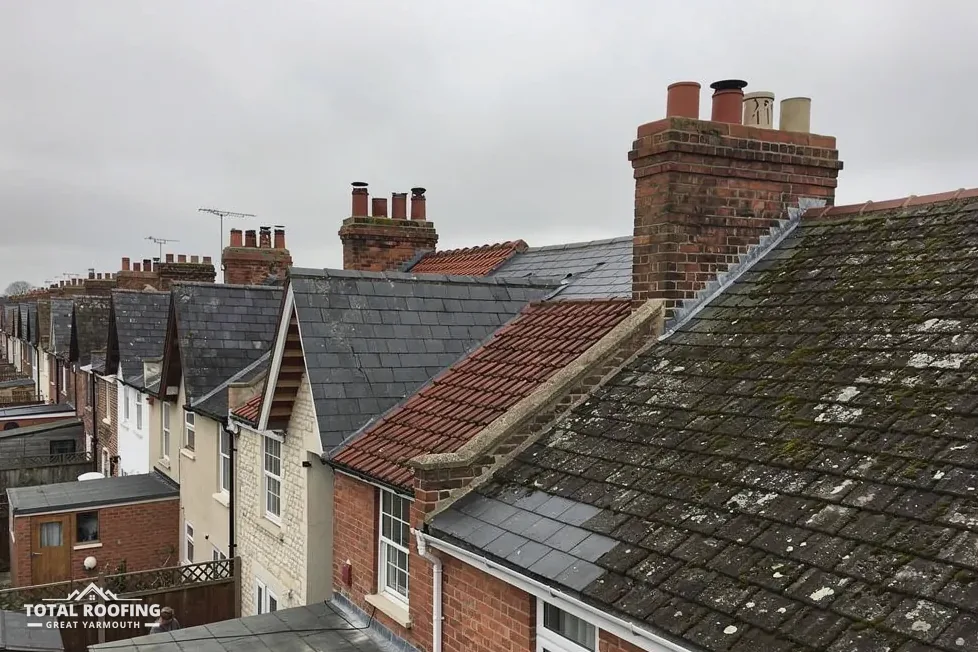
Rear slate roofs and chimneys of Victorian terraces
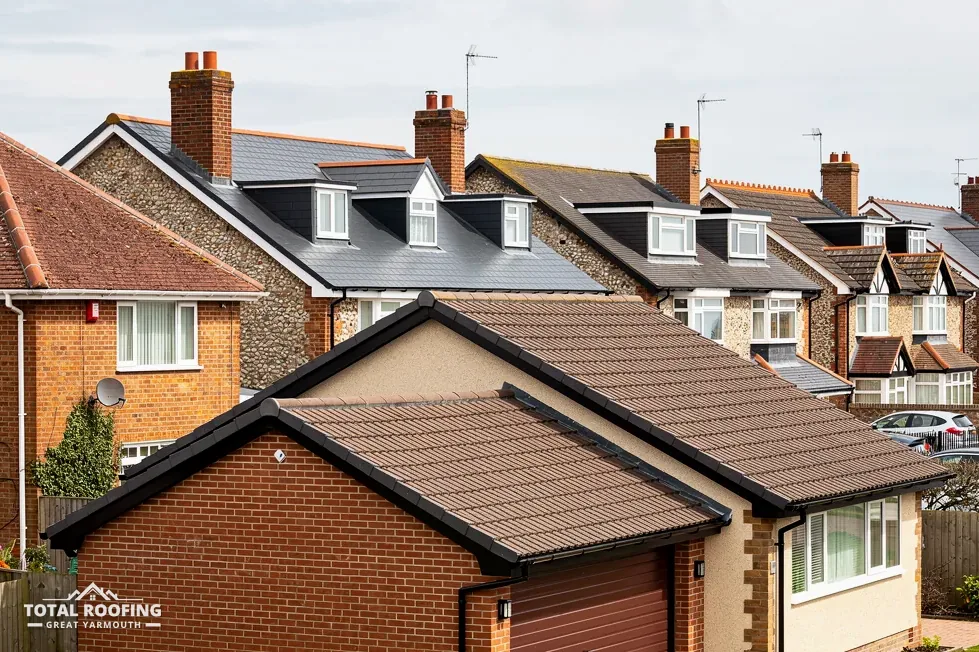
A detached brick garage with a newly re-tiled pitched roof

Stoke Mill and the conservation area

  • Inside or outside the boundary

    South Norfolk Council has designated the Stoke Holy Cross Conservation Area. Only the council can place a given house inside it or outside it, so give it the full address and raise Article 4 in the same call.

    An Article 4 direction can remove further permitted development rights, so check with the council first. The survey runs the same whichever way the council answers: every part is looked at, and what it needs is explained to you, whatever the council says.

  • Stoke Mill and Mill House

    Stoke Mill is listed Grade II (National Heritage List entry 1373207), and Stoke Mill House is listed Grade II (entry 1169680, first listed 7 September 1988). Eight listed buildings lie nearby.

    Listed building consent from South Norfolk Council covers works that would affect a listing's character, so the council's view is sought before the work is booked, and the same goes for any neighbouring house that turns out to be listed.

  • St Remigius and the neighbours

    The Church of St Remigius, Dunston, near Stoke Holy Cross, is listed Grade II* (entry 1050433, first listed 26 November 1959). Repairs to its roof are taken through the faculty system run by the Diocese of Norwich.

    Framingham Earl, Shotesham, Poringland and Swardeston are the nearest villages round about. South Norfolk Council and CNC Building Control cover every one of them.

Who decides what in Stoke Holy Cross

  • Planning: South Norfolk Council; Stoke Holy Cross lies outside the Broads executive area.
  • Building control: CNC Building Control, Norwich office, 0808 168 5041.
  • Stoke Holy Cross Conservation Area: designated by South Norfolk Council.
  • St Remigius church, Grade II*: faculty system, Diocese of Norwich.
  • Frames over road or pavement: Norfolk County Council licence; we arrange the licence with our scaffolder.

The general rules on permission are laid out in our planning guide, and your address goes to the council first, ahead of any start.

Map of Stoke Holy Cross and the places nearest to it. Map tiles © Esri; map data © OpenStreetMap contributors.

Ask it straight · Stoke Holy Cross

Stoke Holy Cross roofs: conservation area, mill, church and a scheduled monument

Stoke Holy Cross parish had 1,922 usual residents at the 2021 Census. South Norfolk Council decides planning here, and CNC Building Control takes the regulations. Four answers follow, on the conservation area, the mill buildings, the church and a scheduled monument listed nationally, with the deciding body named each time.

Does the Stoke Holy Cross Conservation Area change roof work?

The short answer

It can. South Norfolk Council designated it, and the council says whether your address is inside and whether Article 4 applies.

South Norfolk Council has designated the Stoke Holy Cross Conservation Area, so the village has one, although only the council can say whether a particular house lies inside it. The council's own figure is public: "There are 21 conservation areas within Broadland, and 52 within South Norfolk." That sentence comes from a page that South Norfolk and Broadland share.

For a house that is inside, a change of tile or slate, or a new roof window, goes to the council before work on it begins. Article 4 is a separate point: an Article 4 direction can remove further permitted development rights, so check with the council first. Neither answer can be worked out from memory of a village map or from what a neighbour was told, and houses along a road at the edge of the area may fall one side or the other. Ask for the reply to be confirmed in writing, so that the quote and the council's answer can be read together.

Mending like with like and switching material are different conversations, and the council hears about whichever one is planned. Designations can also affect the choice of covering and the way ridges and verges are finished, so the council's reply is gathered early in the process. The first step of any job is the survey, which labels each element of the roof and explains the repair it calls for. The planning route follows from what you decide to do about those findings, and from nothing else.

For the call to the council

  • My full address and postcode
  • Whether it lies in the conservation area
  • Whether Article 4 applies to it
  • What route a new covering would take

What does a Grade II listing mean for Stoke Mill's roof?

The short answer

Listed building consent is needed for works affecting a listing's character, and South Norfolk Council decides it.

Stoke Mill is listed Grade II (National Heritage List entry 1373207), and Stoke Mill House is listed Grade II (entry 1169680, first listed 7 September 1988). Both sit among the eight listed buildings nearby. Consent is needed for anything that affects a listed building's character, even though the home keeps its permitted development rights for roof work, so even a small change of material goes to the council. A mill and its house can each carry their own entry, as here, and the two entries are looked up separately. It is the status, not the roof's condition, that triggers the question.

A listed roof raises questions that an ordinary house roof does not: how a covering meets old brickwork, how lead is dressed at the junction with a wall, whether a ridge or a hip is original. The wording the council applies is that nothing may be done "in any manner which would affect its character as a building of special architectural or historic interest" without consent.

So a repair that matches what exists and a change of covering are put to the council as separate questions. Our pitched roofing page explains how sloping roofs are built up, which helps when a council officer asks what is planned and why. We describe each part of the roof by name and say what is wrong with it, so you know exactly what to put to the council.

Mill House and mill

Stoke Mill House

  • Grade II, entry 1169680
  • Listed 7 September 1988
  • Consent for character changes

Stoke Mill

  • Grade II, entry 1373207
  • Same consent test
  • Asked of South Norfolk Council

Which body approves a roof repair at St Remigius, Dunston?

The short answer

The Diocese of Norwich, through the faculty system. Exterior planning questions go to South Norfolk Council.

The Church of St Remigius, Dunston, near Stoke Holy Cross, is listed Grade II* (National Heritage List entry 1050433, first listed 26 November 1959). As a Church of England church it is exempt from listed building consent under the ecclesiastical exemption, and its roof repairs are authorised by faculty, a church permission given inside the Diocese of Norwich and not by the council.

The exemption replaces listed building consent only, and it does so because the church is a Church of England church. Exterior planning belongs to South Norfolk Council, because the Broads executive area does not include this village, and the regulations go to CNC Building Control, a partnership of five councils (South Norfolk, Norwich City, Broadland, King's Lynn & West Norfolk and Fenland). One church roof can therefore involve the diocese, the council and CNC at once, so ask all three before a booking is made, and note each reply.

A church roof is surveyed as any roof is surveyed: covering, ridge, gutters, timbers and the lead at each junction. Our lead roofing page covers flashings and valleys, and the survey tells you what each one needs. A parish thinking about its roof, whether for leaks or for the ageing of the covering, will want those details settled before the diocese is approached, since the diocese will ask what is proposed and in which materials.

Church consent terms

  • FacultyChurch permission, granted through the diocese.
  • ExemptionLifts listed consent from Church of England churches in use.
  • Grade II*A listing grade on the National Heritage List.
  • DioceseThe Church of England area that decides.

How does scheduled monument consent differ from listed building consent?

The short answer

Works to a scheduled monument must be authorised under the 1979 Act, and the Secretary of State alone gives consent, on applications made to Historic England.

Entry 1021463 on the National Heritage List is Venta Icenorum: Roman town and associated prehistoric, Anglo-Saxon and medieval remains, a scheduled monument in the neighbouring parish of Caistor St Edmund and Bixley, and a different kind of designation from the Grade II and Grade II* listings elsewhere on this page. Do not assume that a roof contractor, or the district council, is the right first call about it. Listing and scheduling are run under different laws; scheduling falls under the 1979 Act (Ancient Monuments and Archaeological Areas).

Section 2 of that Act makes works to a scheduled monument unlawful where no authorisation has been given. Authorisation rests with the Secretary of State, applications arrive through Historic England, and no say rests with a district council. Anyone with a question about the monument itself should start with Historic England and its list entry, whose list entry identifies the monument, before a contractor is engaged or a scaffold is ordered.

For a house roof in Stoke Holy Cross the monument changes nothing unless the property is itself scheduled, which its list entry would show. We mention it because looking the village up on the National Heritage List can turn it up and puzzle a reader. Listing, scheduling and conservation area status are three separate systems, each with its own consent, so it pays to ask which of them, if any, bears on your own roof, and to ask the right office for each.

Myth

Scheduled monument consent comes from the district council.

Fact

The Secretary of State authorises it, on applications made to Historic England.

Stoke Holy Cross: scaffold, foam, lead, wildlife, price

Does a scaffold on a Stoke Holy Cross road need a licence?

Yes, under section 169 of the Highways Act 1980, and the highway authority issues it. Norfolk County Council charges £178.33 for the first 28 days and £178.33 for each further 28 days, with a fresh application for every new erection. The licence is something we arrange with our scaffolder, and the frame is part of the written quote.

Is spray foam under a Stoke Holy Cross roof a problem for lenders?

RICS reported in March 2023 "concern within specific sectors of the lending market, such as equity release mortgages". Government guidance from October 2026 says "Many mortgage providers are open to lending on properties with spray foam, subject to their own requirements.", so check with your lender and a specialist surveyor first. Removal "will not always guarantee that they will still lend". Our spray foam removal page covers the work.

Which lead code suits flashing on a Stoke Holy Cross chimney?

Lead sheet runs from code 3 to code 8 under BS EN 12588. Leadworx says "Code 4 has become the standard choice for general flashing work", yet the specification names the code for every detail, which means the survey, and not a rule of thumb, decides. MyJobQuote says correctly installed lead flashing "can last for over 80 years".

Do nests or bats in a Stoke Holy Cross loft stop a re-roof?

Both are protected. A wild bird's nest is protected "while that nest is in use or being built", and damaging or destroying a bat roost is an offence whatever the intent. Natural England licences can be needed for a range of work, and "repairing or replacing a roof" is on the list, so mention anything you have seen in the loft or at the eaves when you first ring.

What should a Stoke Holy Cross re-roof quote be set against?

One published yardstick is the Which? Trusted Traders survey of 11 traders (November 2025): £7,000 to £21,000 (excluding VAT) was the band it gave to renew in full the roof of an average three-bedroom house. Where yours lands depends on its area, the covering chosen, the way in and the state of the timbers. From us you get one written total, drawn up once the survey is done.

Stoke Holy Cross: written roof price

Tell us about your roof

10-year workmanship guarantee, in writing

Call WhatsApp Written quote