
Call 01493 277103

Catfield, 13.3 road miles north-west

Roofers in Catfield

Catfield lies north-west of Great Yarmouth, 13.3 road miles away by the route we drive. We go over the full roof, report on every fault found, and confirm with North Norfolk District Council which approvals your address needs before the work gets under way.

Get a written quote

Call 01493 277103WhatsApp us

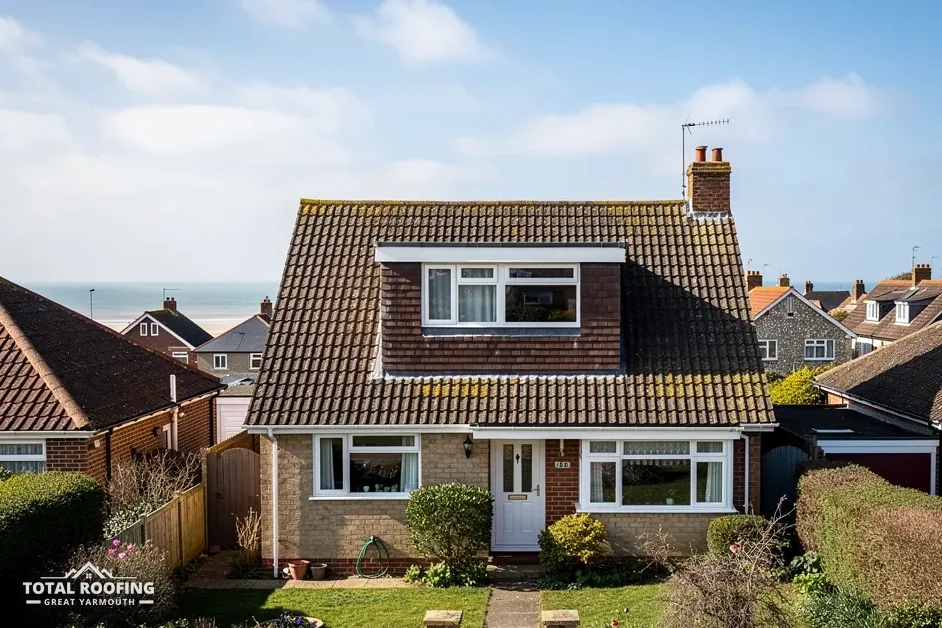
A dormer bungalow with a tiled roof and a box dormer
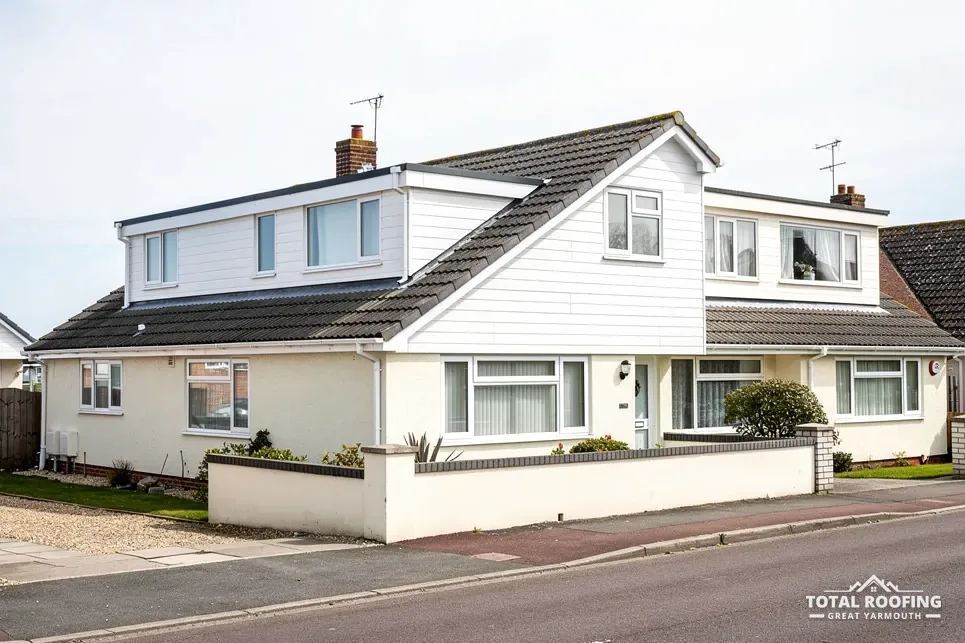
A pair of chalet bungalows with flat-roofed box dormers

Catfield's conservation area and Heath Farmhouse

  • Inside the Catfield Conservation Area

    Catfield has a conservation area, designated by North Norfolk District Council. Where its line falls relative to your house is a question for the council, and worth asking before a covering is swapped or a roof window goes in. An Article 4 direction can remove further permitted development rights, so check with the council first.

    Wherever the line falls, the survey follows the roof from ridge to eaves: slope after slope of covering, the valley linings, the flashing at each stack and the battens under it all.

  • Marsh and riverside edges

    The Broads executive area does not take in Catfield, but its boundary sits close. Marsh or riverside land at the edge may belong to the Broads Authority, so confirm your address before taking it that North Norfolk District Council alone decides.

    Building control is untouched by that line: re-roofing queries go to North Norfolk District Council's Building Control team on 01263 516345. On flooding, GOV.UK's long-term flood risk service is area risk, and it does not tell you how likely it is that an individual property will flood.

  • Heath Farmhouse and Church Cottage

    Heath Farmhouse is listed Grade II (National Heritage List entry 1305534, first listed 16 April 1955), and so is Church Cottage (entry 1049936). Roof work on either that would alter the character of the building needs listed building consent first.

    Five listed buildings stand near Catfield, so a house with an unremarkable frontage on the lane may still be listed. The council can confirm that from your address.

Catfield roof rulings: council, boundary and church

  • Planning: North Norfolk District Council decides, though edge land near the Broads boundary needs an address check.
  • Building control: North Norfolk District Council's own team, 01263 516345.
  • Catfield has a conservation area, designated by North Norfolk District Council.
  • Church of All Saints, Grade I: faculty route via the Norwich diocese, not listed building consent.
  • Road or pavement scaffold: licence from Norfolk County Council, arranged with our scaffolder.

Our planning guide covers when permission is needed; the council confirms the route for your address before work begins.

Map of Catfield and the places nearest to it. Map tiles © Esri; map data © OpenStreetMap contributors.

Ask it straight · Catfield

Catfield roofs: building control, All Saints, the scaffold licence and asbestos

Catfield parish had 983 usual residents at the 2021 Census. Its roofs answer to a single planning council, a single building control team and, in the case of the church, the Church of England's own consent system. Each answer below names the body that rules on one part of a roof job, so the first call goes to the right office.

Does a Catfield re-roof need a building regulations application?

The short answer

Recovering the entire roof does, because that goes past half of it. A small repair can sit under both Planning Portal limits and then needs no application.

Start with the Planning Portal, which sets two limits at once. No building regulations application is normally needed if "Less than 25 per cent of the total 'building envelope'" is affected and "Less than 50 per cent of the roof is affected". Stripping a Catfield roof back to its battens breaks the second limit however the new covering is made, so building control hears about that kind of job before the first tile comes off.

Added weight is the other trigger. The Planning Portal puts it at a covering "15 per cent or more" heavier than what it replaces, and before approval is sought an engineer or surveyor should check the roof structure. That is why a survey reaches the timbers that carry the covering (rafters, purlins and wall plates), viewed from the loft, along with the tiles you can see from the lane.

For a Catfield address the building regulations route runs through North Norfolk District Council's own Building Control team, on 01263 516345, or through a registered building control approver instead. Jobs small enough to stay under both limits are described on our roof repairs page. Whichever side of the limits a job falls, the quote arrives after the survey as one written total.

What the survey reads on a Catfield re-roof

  • Tile or slate condition across every slope
  • Ridge line and whatever holds it down
  • Valley linings where two slopes meet
  • Flashing around each stack and wall junction
  • Battens and underlay, viewed from the loft
  • Gutter falls and downpipes at the eaves

How is roof work on All Saints church in Catfield approved?

The short answer

Through the Church of England faculty system, which stands in for listed building consent. Exterior planning permission is a separate question for the council.

The Church of All Saints carries a Grade I listing (National Heritage List entry 1373413, first listed 16 April 1955) and is a Church of England building within the Diocese of Norwich. While a Church of England church remains in use for worship, the ecclesiastical exemption applies to it, so roof repairs are authorised by faculty instead of by listed building consent.

The exemption swaps out listed building consent and nothing else: a planning application for outside work may still be needed under the usual tests, and building control carries on as for any other building. Three separate questions therefore sit behind a church roof: faculty, planning and building control. Putting them to the right bodies in that order saves a parish from booking a scaffold too soon. The roof itself gets the same whole-roof survey a house would: covering, leadwork, gutters and the timbers beneath, reported in plain words.

Houses go by the secular route. Heath Farmhouse (entry 1305534) and Church Cottage (entry 1049936) are Grade II, and consent is needed for works "in any manner which would affect its character as a building of special architectural or historic interest". North Norfolk District Council grants that consent, so ask it before you accept any quote that touches a listed roof.

Church and farmhouse

All Saints

  • Faculty route, Norwich diocese
  • Grade I, entry 1373413
  • Exterior planning still applies

Heath Farmhouse

  • Listed building consent
  • Grade II, entry 1305534
  • Protects the building's character

Does a Catfield scaffold need a licence, and from whom?

The short answer

Norfolk County Council charges £178.33 for the first 28 days of a scaffold licence, and we arrange the licence with our scaffolder.

Section 169 of the Highways Act 1980 requires a licence for scaffolding on a pavement or carriageway. The wording catches anybody who would "erect or retain on or over a highway" any scaffolding that obstructs it, so a frame leaning out above the footway needs one just as a frame standing on the verge does. The body that grants it here is Norfolk County Council, the highway authority, and not North Norfolk District Council.

Norfolk County Council charges £178.33 for the first 28 days and the same amount again for each further 28 days. Its page says "Please allow 7 calendar days for applications to be processed", and every scaffold that is put up needs its own application. The word "retain" in the statute matters as well: a frame left standing stays under the licence, so an overrunning job moves on from one 28-day period to the next.

A Catfield job that needs scaffold carries it as part of the written quote. We arrange the licence with our scaffolder, and the survey notes where a frame could stand, because a narrow lane changes how the poles and boards are laid out. Gutters, fascias and eaves boards are reached from the same frame, so the survey takes in those parts in the same visit.

Myth

A scaffold licence is one fee for the whole job.

Fact

Norfolk County Council charges £178.33 per 28 days and wants a new application for each scaffold.

Asbestos cement sheets off a Catfield shed: where does the waste go?

The short answer

Not to a recycling centre, since Norfolk County Council does not accept any asbestos at its recycling centres; HSE says to use a lockable skip for the waste.

Assume the material is present until shown otherwise. HSE's line is "If the building was built or refurbished before 2000, assume that there is asbestos in it." A shed, barn or garage roof of that age may carry corrugated cement sheets or cement rainwater goods, and white insulating-board panels can line the soffit below the eaves. HSE names "AIB white soffit panels to underside of roof eaves" among the places the material turns up.

HSE sorts the work by condition. Non-licensed work covers "asbestos cement products, (eg roof sheeting and rainwater goods) provided the material is carefully handled/removed without breaking up". Where sheeting is "substantially damaged or broken up", the work is notifiable, and most work on asbestos insulating board (AIB) is licensed. HSE also states "AC roofs are always fragile", so no one should stand on one.

Norfolk County Council does not accept any asbestos at its recycling centres, which rules out the household tip for the sheets. HSE's waste guidance says "Use a lockable skip for asbestos", and the consignment-note exemption for household hazardous waste is stated as "other than asbestos waste". Asbestos from a Catfield roof therefore stays apart from ordinary rubbish, in a skip that locks, and stays out of the household bin and the household tip alike.

Order of checks before a sheet moves

  1. Date the building: built or refurbished before 2000 means assume asbestos
  2. Have the material identified before anyone touches it
  3. Note whether each sheet is whole or broken
  4. Have a lockable skip ready, never an open one

Catfield roofs: leaks, conservatories, cost and contracts

Rain is marking a bedroom ceiling in Catfield: where is it coming in?

A ceiling stain can trace back to a slipped tile, a failed flashing, a blocked valley or a gutter spilling at the eaves. The survey follows the stain up from the loft to the roof to find which. Photograph the stain and the roof from the ground, then send both to WhatsApp (07880 284133) and we look at them. Our emergency roof repairs page covers making a leaking roof safe.

Is a replacement solid roof on a Catfield conservatory a building control matter?

Yes. The Planning Portal says "A new roof must comply with building regulations", so we confirm the route with North Norfolk District Council's Building Control team ahead of any work. Planning is a second question: the Planning Portal says permission may be needed if the change "significantly alters" how the roof is built or looks. Our conservatory roofs page sets out the options.

Roughly what should I expect to pay for a full re-roof around Catfield?

Which? Trusted Traders price a complete roof replacement on an average three-bedroom house at £7,000 to £21,000, excluding VAT (survey of 11 traders, November 2025). Roof size, the chosen covering, access and the state of the timbers under the old one decide where a Catfield roof lands, and what you receive is one written total, priced following the survey.

A storm lifted tiles in Catfield: what do I tell the insurer?

Before any debris is moved, get pictures of what the storm did from ground level, then report it to your insurer. The Financial Ombudsman Service says "we'll usually look at expert reports and photos" when it reviews a complaint, and its description of a storm is "a storm usually involves violent winds, usually with rain, hail or snow". Both are worth having to hand when you describe what happened to the insurer's claims team.

How long do I have to cancel a roof contract signed at home in Catfield?

A contract signed at your home after a survey can be cancelled: the cancellation period ends at the end of 14 days after the day on which the contract is entered into. The work can start earlier only on your written request, and the right to cancel remains, although you may owe for what has been done by then.

Sutton, Hickling and Ludham close by

Catfield roof, one written price

Tell us about your roof

10-year workmanship guarantee, in writing

Call WhatsApp Written quote