
Call 01493 277103

Coltishall, 21.3 road miles north-west

Roofers in Coltishall

Coltishall is a parish 21.3 road miles from Great Yarmouth on the north-western side, partly inside the Broads executive area. Every slope is surveyed, the findings are set out in everyday words, and we check which planning authority covers your address before any work is priced.

Get a written quote

Call 01493 277103WhatsApp us

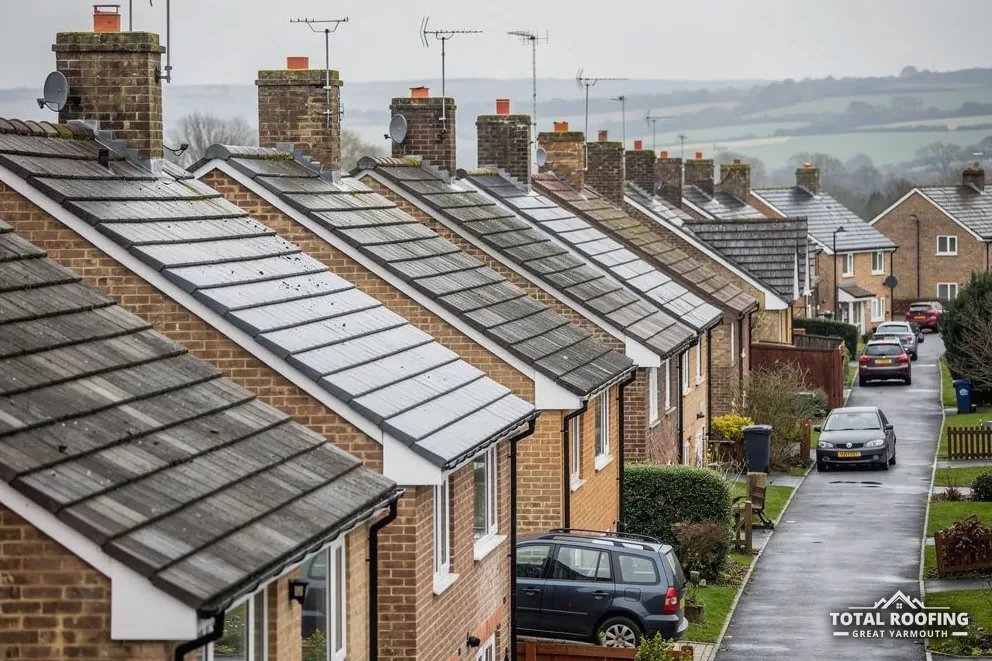
Modern brick estate houses with concrete tile roofs in a Wiltshire town
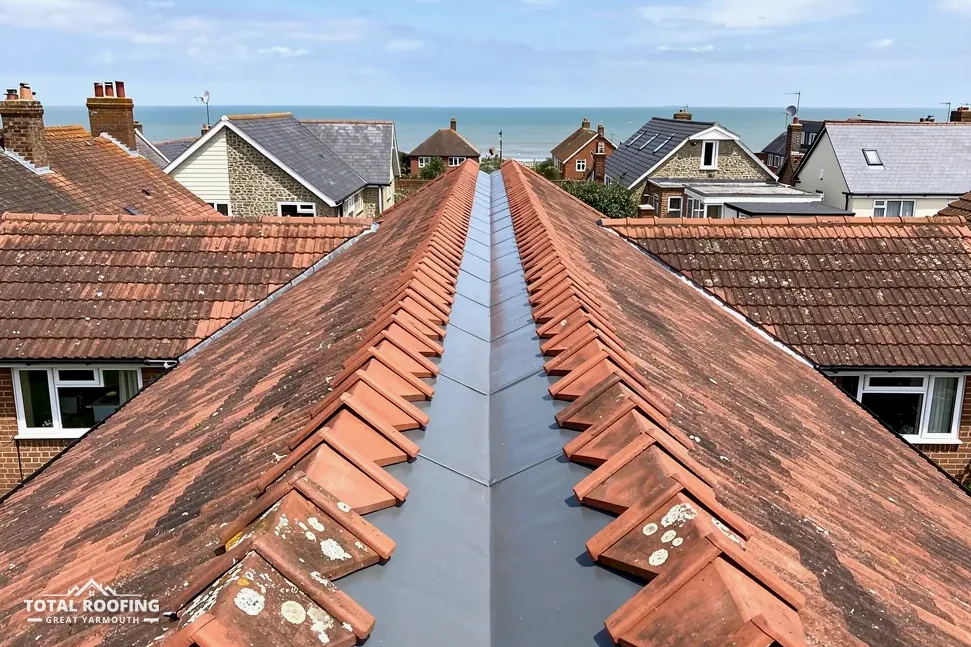
Lead-lined valley where two clay-tiled roof slopes meet

Anchor Street, the parish church and the river

  • Land at Anchor Street

    One Article 4 entry is the Broads Authority's, dated 1982, for land at Anchor Street, Coltishall, inside its executive area. Its table lists gates, fences, walls and other enclosures, works to an unadopted street or private way, and the use of land for a caravan site, under the GPDO.

    That entry covers the Anchor Street land only, so any other Coltishall street has to be checked with the council. Our survey of the roof runs the same either way: covering, ridge, verges, valleys, flashings and the timbers under them, with each part explained once the survey ends.

  • Within the Horstead boundary line

    Coltishall has a conservation area, the Coltishall and Horstead Conservation Area, which Broadland District Council shares with the Broads Authority for the part inside the Broads. Only the address can say if a house falls within it, so ask the council, then ask about Article 4.

    If a new covering or an extra roof window is planned inside a conservation area, we check with the council whether a direction applies.

  • Grade I and II* buildings

    The Parish Church of St John the Baptist is listed Grade I, entry 1177913. Entry 1372990 lists The Old House at Grade II*. Just over the parish boundary in Horstead, entry 1178235 lists the Parish Church of All Saints at Grade II*.

    Forty-two listed buildings lie near Coltishall, so an ordinary-looking Coltishall house can turn out to be listed itself. The council can confirm it from the address, and any change to how a listed roof looks or is built calls for consent first.

Who rules on a Coltishall roof job

  • Planning: Broads Authority inside its executive area, Broadland District Council elsewhere. Check your address.
  • Building control stays with CNC Building Control, a partnership of five councils, from its Norwich office.
  • The Coltishall and Horstead Conservation Area is Broadland's, shared with the Broads Authority inside the Broads.
  • Grade I parish church: the Church of England faculty system applies, not listed building consent.
  • A road or pavement scaffold needs a Norfolk County Council licence; we arrange it with our scaffolder.

Our planning guide explains when permission is required, and for Coltishall we confirm which body holds the route before anything starts.

Map of Coltishall and the places nearest to it. Map tiles © Esri; map data © OpenStreetMap contributors.

Ask it straight · Coltishall

Coltishall roofs: the Broads boundary, the church, Anchor Street and Great Hautbois

Coltishall parish had 1,446 usual residents at the 2021 Census, and its roofs answer to more than one authority. The four answers below follow the questions that the boundary, the church, the Anchor Street entry and a scheduled monument raise, and each one names who gives the ruling.

Does the Broads Authority or Broadland rule on a Coltishall roof?

The short answer

Both, depending on the land. The Broads Authority decides planning inside its executive area and Broadland District Council decides for the rest, so the address settles it.

Part of Coltishall lies inside the Broads Authority's executive area. The Authority puts its own role this way: "We are the local planning authority for all land and properties within our executive area". Beyond that line, Broadland District Council holds planning. A single street can hold houses on both sides of the boundary, which is why guessing from the village name is unreliable.

Planning is the only thing the line moves. Building control stays with Broadland's provider, CNC Building Control, a partnership of five councils (South Norfolk, Norwich City, Broadland, King's Lynn & West Norfolk and Fenland); Coltishall owners reach its Norwich office on 0808 168 5041, or they can use a registered building control approver instead. The Broads Authority has national park status, and for land inside its executive area it is the planning authority, a role that leaves building control with the district.

For planning questions on land inside the boundary, the Broads Authority is on 01603 610734. We check the route with the right body before work starts, and the survey then leads to a single written total. A boundary that cuts across a plot can mean two authorities for one roof, so we raise that early rather than late. The roof repairs page explains what the survey covers.

Settling the Coltishall route

  1. Note the full address, postcode included
  2. Ask which authority holds planning for that land
  3. Ask about the conservation area and Article 4
  4. Building control goes to CNC or an approver

How is roof work on Coltishall's parish church approved?

The short answer

Through the Church of England faculty system, which replaces listed building consent. Planning permission for exterior alterations remains a separate question.

The Parish Church of St John the Baptist is listed Grade I (National Heritage List entry 1177913, first listed 10 May 1961), and it is a Church of England church in the Diocese of Norwich. Because the building is still used for worship, the ecclesiastical exemption applies and lifts it out of listed building consent. Repairs to its roof are authorised through the faculty system instead: a faculty petition is decided in the diocese's consistory court, where the chancellor sits as judge.

The exemption replaces listed building consent only, so where an exterior alteration needs planning permission, it comes from whichever authority holds the land, and building control carries on as for any building. A church roof therefore raises three separate answers, a good reason to settle them before anyone books a scaffold, and the same sequence suits a parish asking about its roof for the first time.

A listed house is different. The Old House is Grade II* (entry 1372990), and consent for work to a listed building is needed for anything that would alter it "in any manner which would affect its character as a building of special architectural or historic interest". That consent comes from the local planning authority for the site, which here means the Broads Authority for the part of the village inside its executive area, or Broadland District Council on the remaining land, so look at your own address first. Whichever it is, ask before the quote is accepted, because a refusal after the work has started is the expensive way to learn the rule.

Church and house routes

Parish church

  • Faculty system, Diocese of Norwich
  • Grade I, entry 1177913
  • Exterior planning stays separate

The Old House

  • Needs listed building consent
  • Grade II*, entry 1372990
  • Its character is the test

Does the Anchor Street Article 4 direction touch a Coltishall roof?

The short answer

It covers the Anchor Street land only, and its table concerns enclosures, private ways and a caravan site. Ask the Broads Authority whether it reaches your address.

The Broads Authority's 1982 entry for land at Anchor Street lists three items in its table: the "Erection of construction of gates, fences, walls or other means of enclosure", "Works to unadopted street or private way" and "Use of land for caravan site". The entry sits under the GPDO, the General Permitted Development Order, and none of the three items reads as a roof control.

Elsewhere in the village, the Coltishall and Horstead Conservation Area was designated by Broadland District Council, and the council can say whether your address is in it. Broadland and South Norfolk publish one page: "There are 21 conservation areas within Broadland, and 52 within South Norfolk." An Article 4 direction can remove further permitted development rights, so check with the council first.

Our habit, in a village with this much designation around it, is to ask before changing a covering or fitting a roof window in any area where the question could arise. The answer is for the council to give for your address, and it takes one call. Where the answer is yes, the route is agreed first, and the one written price follows the survey. Where the answer is no, the job simply goes ahead on the usual footing. Either way the covering, flashings and timbers are surveyed in the same way, and only the planning route changes with the answer.

Asked of the council before a covering changes

  • Is the house inside the conservation area?
  • Does an Article 4 direction apply to it?
  • Does a listing cover the building, and which grade?
  • Which authority holds planning for the land?

What does Great Hautbois old church mean for roof work?

The short answer

It is a scheduled monument, so works need scheduled monument consent, a different system from listing, with Historic England receiving the application.

Great Hautbois old church is a scheduled monument (National Heritage List entry 1003956). Scheduling is a separate system from listing, and its legal basis is the Ancient Monuments and Archaeological Areas Act 1979. Section 2 makes works to a scheduled monument an offence unless those works are authorised. The rule is the same for any structure the scheduling covers, its walls and the ground about them included, whether or not anything there still carries a roof.

The decision rests with the Secretary of State, while Historic England is where an application lands; the district council is not the body. A question about a monument therefore should not go to Broadland District Council first, and a call to the wrong office only delays the answer. Anyone managing land that includes scheduled remains should ask Historic England before any contractor is booked, and before any scaffold goes up near the monument.

A house roof in Coltishall is another matter, and only its own listing or conservation status applies. We mention the monument because a reader looking up their address on the National Heritage List may see it listed and wonder whether it affects them. For an ordinary house it does not change the route, and the usual questions about planning, building control and any listing stay exactly as set out above.

Myth

A scheduled monument is dealt with by the district council.

Fact

Historic England takes the application and the Secretary of State decides.

Coltishall roofs: leaks, scaffolds, asbestos, cancelling and cost

A tile has slipped on my Coltishall roof: is it safe to leave?

A slipped tile leaves the underlay exposed, and rain then reaches the battens. Photograph it from the ground and send the photo to WhatsApp (07880 284133) for us to look over and answer. Never climb up yourself, and keep anyone off the ground beneath, since a slipped tile can drop further. The survey then checks the neighbouring tiles, because a nail that has let one go can have loosened others. Our emergency roof repairs page covers the make-safe stage.

Who pays for a scaffold licence on a Coltishall road?

We arrange the licence with our scaffolder. Norfolk County Council charges £178.33 for the first 28 days of a scaffold over the road or pavement, and the same for each further 28 days. Its page says to "Please allow 7 calendar days for applications to be processed", and each new scaffold needs a fresh application.

Where should asbestos sheets from a Coltishall outbuilding go?

Norfolk County Council does not accept any asbestos at its recycling centres. HSE advises assuming that a building built or refurbished before 2000 contains asbestos, and says to "Use a lockable skip for asbestos". Cement sheets lifted whole and unbroken count as non-licensed work, and asbestos waste is excluded from the household consignment-note exemption.

I signed a roof contract at home in Coltishall: can I cancel it?

Yes, within a set window. Sign at home in Coltishall after a survey, and the cancellation period ends at the end of 14 days after the day on which the contract is entered into. Starting earlier needs your written request, and you may then owe for work already done. No cancellation right applies where you asked us for a visit to carry out urgent repairs. A Coltishall customer who signs and then has doubts should say so in writing within the window.

What does a new roof cost around Coltishall?

Which? Trusted Traders put a full replacement on an average three-bedroom house at £7,000 to £21,000 excluding VAT (November 2025, survey of 11 traders). Roof area, covering, access and anything found below the existing tiles or slates at the survey decide where your own figure falls, and it comes as one written total price afterwards.

Your Coltishall roof, priced in writing

Tell us about your roof

10-year workmanship guarantee, in writing

Call WhatsApp Written quote